Energy is typically a hotel’s second or third largest operating expense after labor and food and beverage. For a 200-room full-service hotel consuming $800,000–$1.2 million in energy annually, a 15–20% efficiency improvement generates $120,000–$240,000 in annual operating cost savings — a figure that falls directly to the bottom line and significantly improves NOI.
Yet the majority of hotel operators lack the data infrastructure to systematically identify their highest-impact efficiency opportunities. Energy benchmarking — the process of measuring, tracking, and comparing energy consumption against baselines and peer groups — provides the analytical foundation for targeted efficiency investments that deliver measurable returns.
Understanding Energy Use Intensity (EUI)
Energy Use Intensity (EUI) is the standardized metric for comparing energy consumption across different-size buildings. EUI is calculated as total annual energy consumption (in kBtu) divided by gross floor area (in square feet). A lower EUI indicates better energy efficiency.
Hotel EUI benchmarks (CBECS/ENERGY STAR data):
- All hotels median EUI: approximately 95–115 kBtu/sq ft/year
- Top quartile (efficient): below 75–85 kBtu/sq ft/year
- Bottom quartile (poor): above 140–160 kBtu/sq ft/year
EUI varies substantially by hotel type, climate zone, and amenity mix. Properties with indoor pools, spas, food and beverage operations, and extensive meeting space consume significantly more energy per square foot than limited-service properties. Direct comparison requires controlling for these factors — which is where the EPA’s ENERGY STAR Portfolio Manager tool adds value.
ENERGY STAR Portfolio Manager
The EPA’s free ENERGY STAR Portfolio Manager (portfoliomanager.energystar.gov) is the industry-standard benchmarking platform for commercial buildings including hotels. Hotels enter utility data (electricity, natural gas, other fuels) and building characteristics (gross floor area, number of rooms, occupancy, amenities, climate data). The system generates:
ENERGY STAR Score (1–100): Compares the property against a national sample of similar hotels, controlling for climate, occupancy, and amenity mix. A score of 75 or higher qualifies for ENERGY STAR Certification — available for hotels since 1999. The median score by definition is 50; properties below 25 are significant underperformers for their peer group.
Site EUI and Source EUI: Site EUI measures energy consumed at the property; source EUI accounts for the energy required to generate and transmit electricity (reflecting the inefficiency of power plant generation and grid transmission). For carbon accounting purposes, source EUI provides a more comprehensive picture.
Trend analysis: Portfolio Manager tracks scores over time, allowing facility teams to measure the impact of efficiency improvements and demonstrate progress to ownership and brand reporting requirements.
Many hotel brands now require ENERGY STAR Portfolio Manager enrollment and mandate minimum score thresholds in brand standards. Franchise renewal and capital access programs increasingly tie to demonstrated energy performance.
Submetering and Interval Data
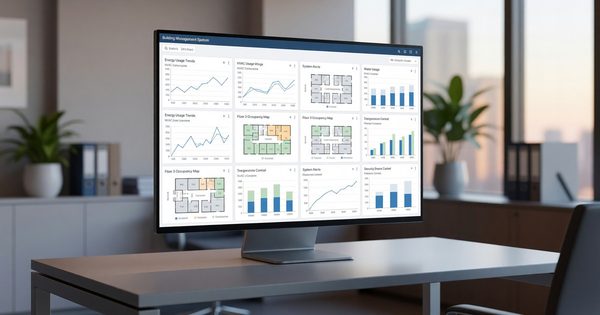
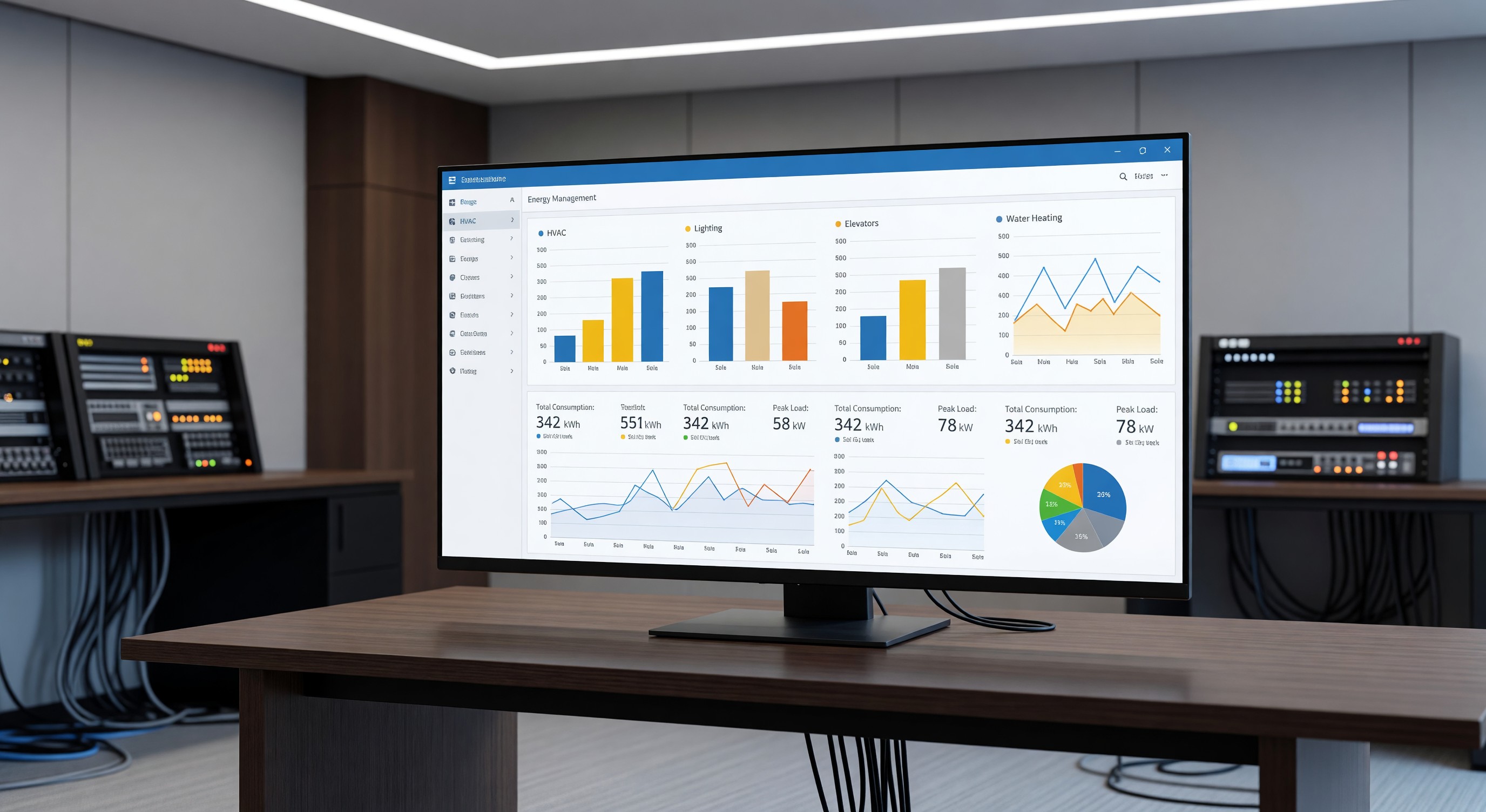
Building-level utility bills show total consumption but cannot identify which systems consume the most energy or when peak consumption occurs. Submetering installs individual meters on major consumption categories:
HVAC submeters: Measure electricity or gas consumed by central plant equipment (chillers, boilers, AHUs, cooling towers) separately from other loads. Enables comparison of HVAC consumption against occupancy and weather data to identify abnormal consumption patterns.
Lighting submeters: Measure lighting consumption by zone or system. Quantifies the impact of LED retrofits and occupancy sensor controls.
Domestic hot water submeters: Isolate DHW energy from total gas consumption to track the impact of water heater upgrades or solar thermal installations.
Food and beverage submeters: Commercial kitchen energy often represents 15–25% of total hotel consumption. Submetering kitchen equipment helps identify energy hogs and supports equipment replacement prioritization.
Interval data — typically 15-minute or hourly consumption readings from smart meters — enables load profile analysis. A hotel with a very high demand peak relative to its average consumption may be paying significant demand charges that could be reduced through demand response strategies, battery storage, or operational changes.
Energy Consumption Baselines by System
Understanding which building systems consume the largest share of energy guides prioritization:
HVAC (heating, cooling, ventilation): Typically 35–50% of total hotel energy consumption. The single largest category — and often the highest-return investment area.
Domestic hot water: 15–25% of total consumption. High at full-service properties with laundry operations.
Lighting: 15–20% (higher in older properties before LED retrofit, lower in recently renovated facilities). LED retrofits have become one of the fastest-payback hotel energy investments, often yielding 3–5 year simple payback.
Plug loads and equipment: 10–15% including guest room televisions, mini-refrigerators, office equipment, and food service equipment.
Elevators: 3–7% of total consumption. Modern VVVF-drive elevators and regenerative drive systems significantly reduce this.
Benchmarking as an Investment Tool
The strategic value of benchmarking extends beyond cost tracking. Capital investment decisions — HVAC equipment replacement, lighting retrofits, building controls upgrades — should be evaluated against benchmarking data:
Identify outliers: Within a multi-property portfolio, properties with ENERGY STAR scores below 30–40 may warrant priority capital investment. Similarly, within a single property, months with anomalous consumption spikes indicate equipment problems or operational issues worth investigating.
Measure retrofit impact: Before-and-after EUI comparison, normalized for occupancy and weather, quantifies the energy savings actually delivered by a capital investment — the data needed to validate performance against pro forma projections and to support incentive applications.
Utility incentive applications: Most utility companies offer rebate programs for energy efficiency upgrades (LED lighting, HVAC controls, variable-speed drives). ENERGY STAR Portfolio Manager data is accepted by many utilities as documentation for baseline and post-improvement consumption in rebate applications.
Getting Started with Hotel Energy Benchmarking
- Enroll in ENERGY STAR Portfolio Manager: Create a free account at portfoliomanager.energystar.gov. Enter property details and authorize data sharing with your utility (many utilities now provide automatic meter data uploads).
- Enter 12 months of utility data: Manual entry from bills works for initial setup; automation via utility data sharing is preferred for ongoing tracking.
- Establish a monthly review cadence: Assign responsibility for reviewing Portfolio Manager data monthly, comparing to prior year and to peer score.
- Conduct a walk-through audit: Use EUI and system-level benchmarking to prioritize an on-site energy audit. ASHRAE Level 1 and Level 2 audits provide structured identification of efficiency opportunities with estimated savings and costs.
Frequently Asked Questions
What is a good ENERGY STAR score for a hotel? The ENERGY STAR scoring scale is percentile-based: a score of 50 is median, 75 is the top quartile and the threshold for ENERGY STAR Certification. A score below 25 indicates the property consumes significantly more energy than comparable hotels and likely has meaningful efficiency opportunities. Scores above 85 reflect genuinely high-performing properties that have likely exhausted the most cost-effective efficiency measures.
How does hotel occupancy affect energy benchmarking? ENERGY STAR Portfolio Manager accounts for occupancy variation when calculating ENERGY STAR scores — properties with higher occupancy are expected to use more energy and are compared to similarly occupied peers. However, EUI calculations are not occupancy-normalized, so year-over-year EUI comparisons should account for occupancy changes to distinguish operational efficiency improvements from volume effects.
What is the typical cost of an energy audit for a mid-size hotel? ASHRAE Level 1 audits (walk-through with opportunity identification) range from $3,000–$8,000 for a mid-size hotel. Level 2 audits (detailed energy analysis with engineering calculations and investment-grade savings estimates) range from $10,000–$30,000 depending on property complexity. Many utilities offer subsidized or free audits as part of their energy efficiency program portfolios.
Can hotels use ENERGY STAR benchmarking for LEED certification? ENERGY STAR benchmarking supports LEED certification pathways (LEED for Operations and Maintenance, LEED O+M). LEED O+M requires an ENERGY STAR score of at least 75 for the Energy and Atmosphere credit pathway. Properties pursuing LEED O+M certification should ensure their Portfolio Manager data is accurate and audit-ready before certification submission.
Further Reading from Authoritative Sources
- DOE ENERGY STAR Portfolio Manager and hotel energy benchmarking resources — The DOE Buildings program administers ENERGY STAR Portfolio Manager and provides hotel energy benchmarking standards, EUI peer comparison data, and efficiency investment guidance applicable to hotel energy performance analysis, certification pathways, and capital prioritization.
- ASHRAE hotel energy audit standards and benchmarking methodology — ASHRAE provides the energy audit level standards (Level 1, 2, 3), EUI benchmarking methodology, and building energy analysis frameworks applicable to hotel energy efficiency program development, audit procurement, and investment prioritization.