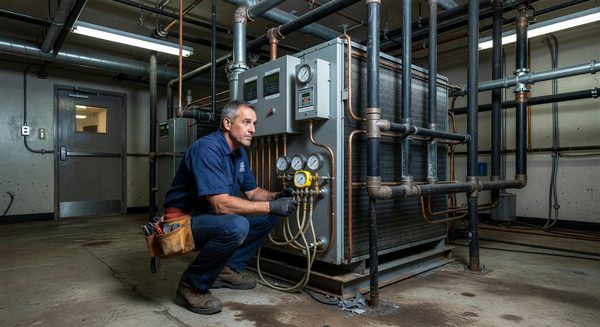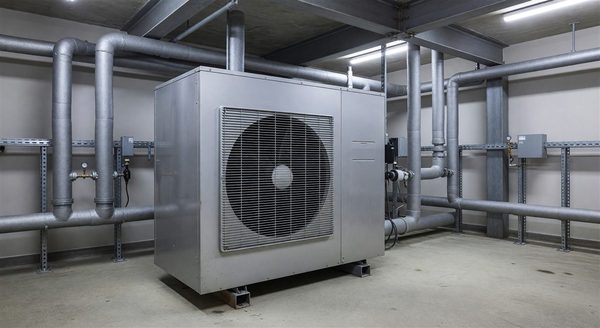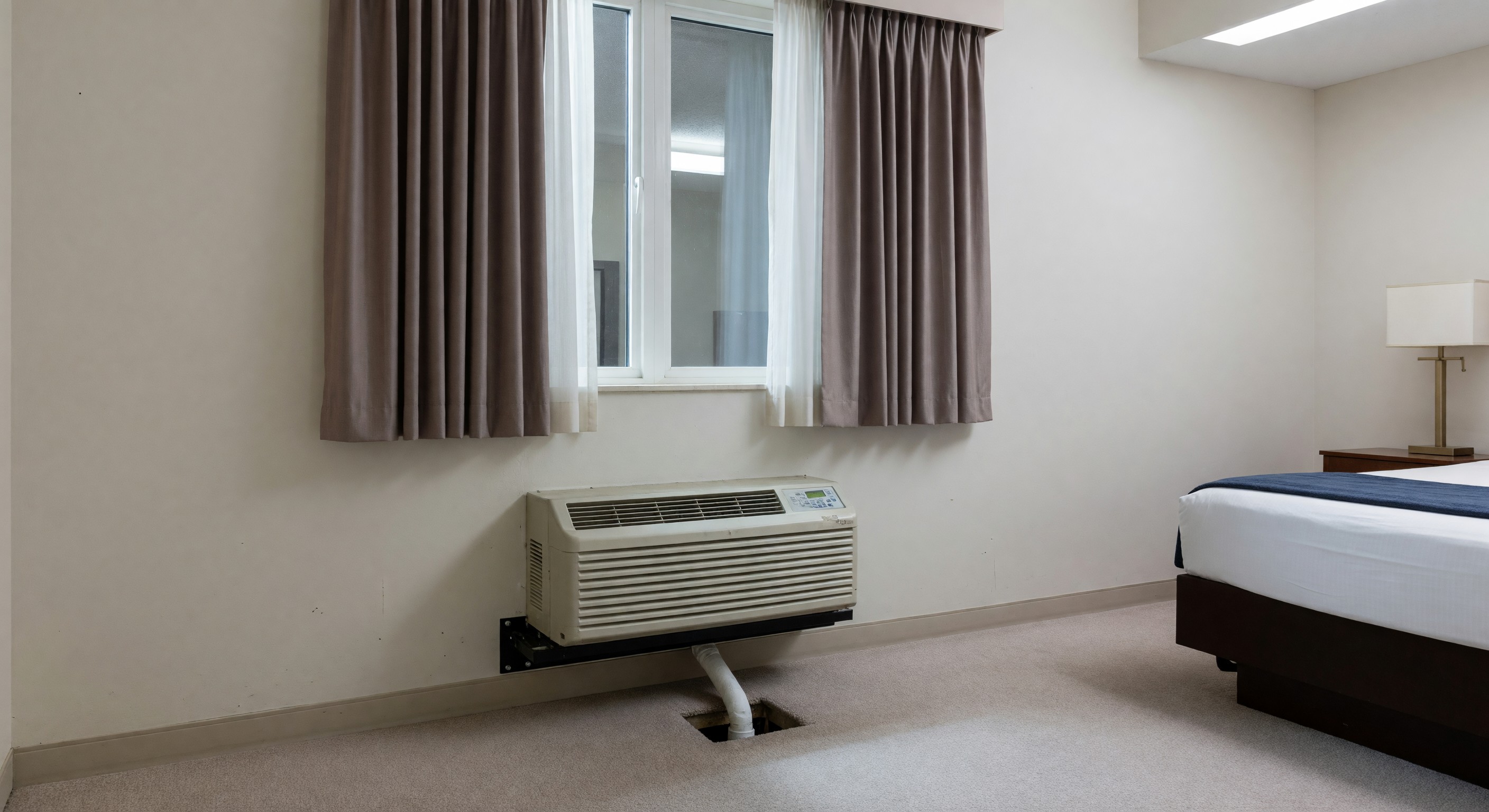
Packaged Terminal Air Conditioners (PTACs) are the dominant guest room HVAC solution at limited-service and select-service hotels across North America. A 200-room hotel has 200 PTACs, each requiring ongoing maintenance, periodic repair, and eventual replacement. Managing this distributed fleet efficiently — minimizing guest complaints, containing maintenance costs, and extending unit service life — is a significant engineering challenge.
This guide covers PTAC management from a facilities perspective: maintenance requirements, common failure modes, the replacement cycle decision, and the alternatives that may make more sense than PTAC replacement when major capital investment is being evaluated.
How PTACs Work and Why They Fail
A PTAC is a self-contained refrigeration system — compressor, condenser, evaporator, and fans all in one unit — that extends through the exterior wall with an outdoor-air-facing component and an indoor-facing component in the guest room. Unlike central HVAC systems, each PTAC operates independently.
The refrigerant circuit: Compressors are the most expensive and failure-prone PTAC component. They wear out from normal cycling, are damaged by refrigerant overcharging or contamination, and are vulnerable to failure from low refrigerant conditions (often caused by slow leaks). A PTAC compressor replacement typically costs $300–$600 in parts plus labor — often approaching or exceeding the cost of a new mid-grade unit.
Heating elements: Most PTACs combine heat pump heating (efficient in mild climates) with electric resistance backup (inefficient but reliable in cold weather). Electric resistance elements fail less frequently than compressors but can burn out from dust accumulation, voltage spikes, or manufacturing defects.
Fan motors: Evaporator and condenser fan motors are relatively simple and durable, but they fail from bearing wear, capacitor failure, and moisture damage. Fan motor replacement is typically a $100–$200 repair.
Controls and thermostats: PTAC control boards can fail from power surge damage, moisture intrusion, and component aging. Control board replacement typically costs $100–$250.
Coil fouling: The evaporator coil (indoor) accumulates dust, lint, and biological growth over time. A fouled evaporator coil restricts airflow, reduces efficiency, and can ice up during cooling operation. The condenser coil (outdoor section) accumulates dust, pollen, and debris from the exterior airstream. Annual cleaning of both coils is the highest-return preventive maintenance investment for PTACs.
PTAC Preventive Maintenance Schedule
Monthly (during high-demand seasons):
- Clean or replace air filter
- Visual inspection of indoor unit for unusual noise, odor, or moisture
- Check that thermostat is responding correctly to temperature setpoint
Quarterly:
- Clean evaporator coil (low-pressure compressed air or vacuum)
- Check condensate drain for blockage
- Test heating and cooling operation through full cycle
- Inspect outdoor section for visible damage, blockage, or pest intrusion
Annual:
- Full coil cleaning (evaporator and condenser) using coil cleaning solution where needed
- Check refrigerant pressure (verify within specification without adding refrigerant unless a confirmed leak is present)
- Clean and inspect drain pan for scale, biological growth, and drain function
- Test all operating modes (heating, cooling, fan-only, ventilation)
- Check electrical connections for corrosion or looseness
- Verify PTAC sleeve (through-wall sleeve) seal and insulation
At room renovation or as-needed:
- Remove PTAC for full interior cleaning and inspection (more thorough than in-place quarterly cleaning)
- Replace drain pan liner if deteriorated
- Clean and repaint exterior sleeve if rusted or deteriorated
Common PTAC Failure Modes and Responses
Guest reports unit not cooling: Check filter first (clogged filter reduces airflow to near zero); check that compressor is operating (audible hum and vibration during compressor operation); check coil for ice buildup (indicates refrigerant issue or severe airflow restriction).
Unit making unusual noise: Rattling often indicates loose panels or vibrating cabinet. Grinding or squealing indicates fan motor bearing failure. Clicking at startup that doesn’t stop may indicate a failing compressor starting capacitor.
Water leaking from indoor unit: Typically indicates condensate drain blockage. Remove any blockage from drain pan and drain line; clean drain pan of biological growth that has obstructed the drain.
Unit cycling on and off rapidly (short cycling): May indicate refrigerant overcharge or undercharge, dirty condenser coil (outdoor section too hot), or thermostat fault. Requires technician diagnosis.
Replacement Cycle and Repair vs. Replace Decision
PTAC service life in hotel applications is typically 8–12 years with proper maintenance. Key factors that accelerate replacement:
- Coastal markets: Salt air accelerates corrosion of condenser coils and cabinet. Coastal hotel PTACs may have 6–8 year effective service lives.
- High-humidity markets: Condensate management is more demanding; drain pans and coils deteriorate faster.
- Maintenance quality: Properties with consistent quarterly cleaning and filter management achieve the higher end of the service life range; properties with minimal PM may see 5–7 year effective lives.
Repair vs. replace decision framework: When a PTAC requires a major repair (compressor, control board), compare the repair cost against the cost of replacement and the unit’s remaining expected service life:
- If the unit is under 5 years old and repair cost is less than 40% of replacement cost: repair
- If the unit is 8+ years old or repair cost exceeds 50% of replacement cost: evaluate replacement
- If the unit has had 2+ major repairs in the past 2 years: replace regardless of age
Phased replacement programs: Rather than replacing all PTACs simultaneously (a $150,000–$400,000 capital event for a 200-room hotel), a rolling replacement program (replacing 20–25% annually) spreads capital, ensures consistent technology generations, and allows service staff to learn new units before the full fleet changes.
Alternatives to PTAC Replacement
When the majority of a hotel’s PTAC fleet reaches end of life simultaneously, the capital replacement decision is an opportunity to evaluate alternatives:
VRF (Variable Refrigerant Flow): VRF systems replace PTACs with a central outdoor unit serving multiple indoor fan coil units via refrigerant piping. Guest experience advantages: significantly quieter (outdoor compressor vs. in-room PTAC), better humidity control, lower energy consumption. Capital cost: higher than PTAC replacement ($2,000–$5,000 per room versus $800–$1,500 for PTAC), but with operational savings that often support the investment over 10–15 year horizon.
Central water-source heat pump: A hybrid approach where central mechanical equipment provides hot and cold water to individual room terminal units. Better comfort and efficiency than PTACs, lower capital cost than VRF, but requires central plant space and hydronic piping distribution.
PTAC replacement with current-generation units: Modern PTAC technology (particularly Amana, Friedrich, and LG hospitality-grade units) has improved significantly in efficiency, noise levels, and connectivity features compared to units manufactured before 2015. Straight PTAC-for-PTAC replacement is the lowest capital, fastest execution option.
Frequently Asked Questions
How much does PTAC replacement cost for a hotel? Commercial-grade PTAC units (replacement-only, no sleeve or electrical work) cost $600–$1,200 per unit for quality hospitality-grade equipment (Amana, Friedrich, LG hotel-grade product lines). Installation (removing old unit, installing new unit, testing) adds $100–$250 per unit. For a 200-room hotel, full PTAC replacement costs approximately $140,000–$290,000 in equipment and installation, before any electrical or structural work.
How do hotels manage PTAC replacement with minimal guest room downtime? Experienced PTAC replacement contractors can typically complete a PTAC swap in 30–90 minutes per room, allowing same-day room turnover when sequenced with housekeeping. Rooms are typically taken out of service the night before (after last checkout) and returned to inventory the following afternoon (before standard check-in). A crew of 3–4 installers working in coordination with housekeeping can complete 15–25 rooms per day in a well-organized program.
Should hotels specify diagnostic outlets or smart PTAC controls for new units? Smart PTAC systems (network-connected units that report operating status, faults, and energy consumption to a central management platform) add $100–$300 per unit in hardware and require network infrastructure in each room, but provide maintenance alerts (fault codes transmitted before guest complaints), energy monitoring, and remote diagnostics. For properties investing in building IoT infrastructure, smart PTACs integrate well with the broader connected building strategy. For properties not pursuing IoT connectivity broadly, the ROI on smart PTAC features alone is more modest.
How often should PTAC filters be changed? Monthly during high-occupancy seasons (summer for cooling-climate hotels, winter for heating-climate hotels), quarterly during low-demand periods. Properties with dusty environments (near construction, high-dust climates), guests with pets (for properties allowing pets), or heavy occupancy should increase filter change frequency. A visual inspection of the filter at monthly housekeeping rounds is the simplest way to calibrate change frequency to actual loading — change when significantly loaded, not strictly on a calendar.
Further Reading from Authoritative Sources
- ASHRAE PTAC and guest room HVAC standards — ASHRAE sets HVAC equipment efficiency standards, testing protocols, and building mechanical system guidance relevant to PTAC selection, operation, and replacement cycle planning.
- DOE commercial HVAC efficiency and replacement guidance — The DOE Buildings program provides efficiency data on commercial HVAC systems including PTACs and VRF alternatives, supporting engineering decisions on PTAC replacement versus system upgrade.