The central chiller plant is the mechanical heart of any full-service or upscale hotel with a hydronic HVAC system. When the chillers perform well, the building is comfortable, energy is used efficiently, and the engineering team gets to focus on other things. When chillers fail — particularly during the height of cooling season — the impact on guests is immediate and severe, and emergency service response is expensive and disruptive.
Managing a chiller plant well requires understanding the equipment at more than a surface level, maintaining it rigorously, and planning for its eventual replacement with the same deliberateness as any major capital project.
Chiller Types in Hotels
Centrifugal Chillers
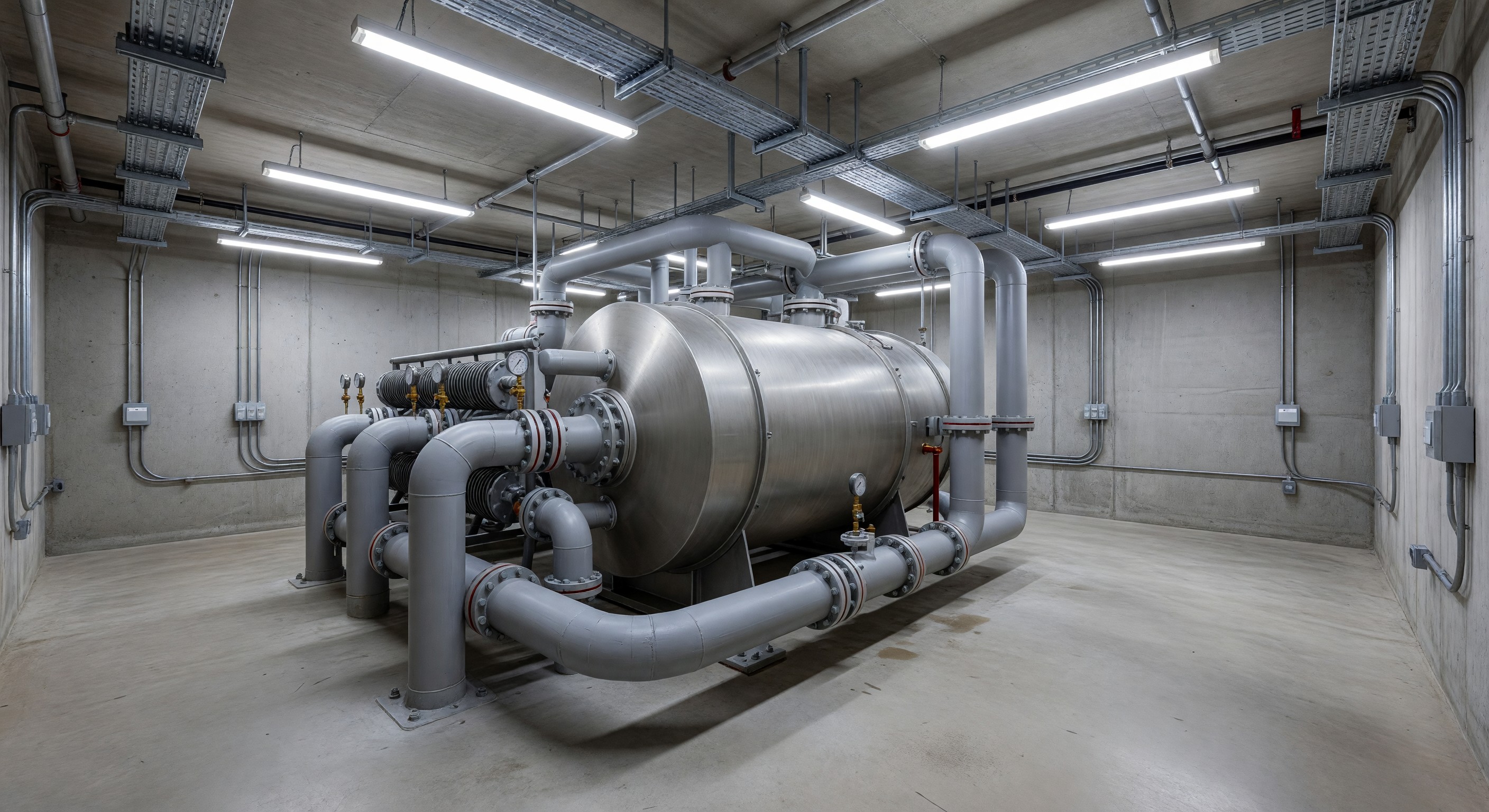
Centrifugal chillers use a centrifugal compressor (an impeller that spins at high speed to compress refrigerant) and are the standard for large hotel applications (500+ tons of cooling). They’re highly efficient at design conditions and offer smooth capacity modulation.
Centrifugal chillers are sophisticated equipment with high-speed rotating components, complex controls, and significant refrigerant charges. They require skilled service by technicians certified for the specific chiller manufacturer’s equipment.
Screw Chillers
Screw chillers use positive displacement (helical screw) compressors. They’re well-suited for mid-size applications (100–500 tons) and perform well at part load conditions that centrifugal chillers sometimes struggle with. Common in mid-size full-service hotels.
Scroll and Reciprocating Chillers
Smaller-capacity chillers (under 100 tons) may use scroll or reciprocating compressors. Less common in hotel chiller plants but found in some applications.
Air-Cooled vs. Water-Cooled
Water-cooled chillers: The most efficient configuration for most hotel applications. The chiller rejects heat to condenser water, which is then cooled by the cooling tower. The cooling tower adds an additional system to maintain but the efficiency gains are significant — water-cooled chillers typically operate at 0.4–0.7 kW/ton vs. 1.0–1.4 kW/ton for air-cooled.
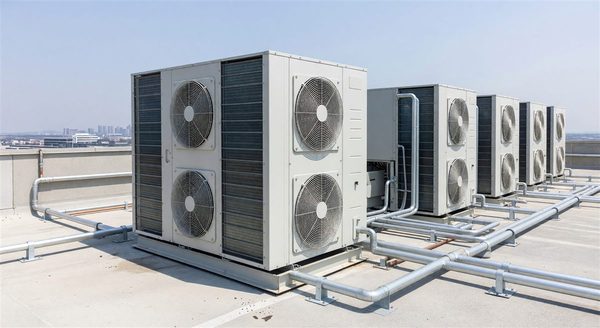
Air-cooled chillers: The chiller rejects heat directly to outdoor air through coils and fans. No cooling tower required. Less efficient, but simpler plant configuration and lower initial cost. Common in smaller hotels or properties where a cooling tower is impractical.
Performance Monitoring
Key Performance Metrics
Monitoring chiller performance against established benchmarks allows early detection of degradation before it causes failures.
COP (Coefficient of Performance): The ratio of cooling output to electrical input. Higher is better. A new centrifugal chiller might operate at COP 6–7 at design conditions; a chiller in poor condition may operate at COP 4–5. Track COP monthly and investigate when it deviates from the expected seasonal norm.
kW/ton: Kilowatts of electrical input per ton of cooling output. Lower is better. The inverse of COP (sort of) — used commonly in chiller plant benchmarking. Track at multiple load points (full load, 50% load, 25% load) because the efficiency profile across the load range matters as much as full-load efficiency.
Approach temperatures: The temperature difference between the leaving chilled water and the evaporator refrigerant temperature. High approach temperatures indicate fouling on the evaporator tube bundle, which reduces efficiency. Similarly, high condenser approach temperatures indicate cooling tower or condenser tube fouling.
Lift: The difference in pressure between the condenser and evaporator. Higher lift = more compressor work. Changes in lift that aren’t explained by outdoor temperature changes warrant investigation.
Data Logging and Analysis
Modern chillers have sophisticated controls that log operational data — temperatures, pressures, power consumption, alarms, and fault codes — continuously. This data is only valuable if someone reviews it regularly.
At minimum, review chiller performance data monthly during cooling season:
- Compare current month performance against same month in prior year
- Check for increasing trend in kW/ton at similar load conditions
- Review alarm and fault log for any events that may indicate developing issues
Advanced properties use building automation system (BAS) dashboards that aggregate chiller performance data and flag deviations automatically.
Preventive Maintenance
Annual Maintenance Requirements
Chiller annual maintenance is typically performed by the manufacturer’s authorized service provider or by certified independent chiller technicians. Annual PM for a centrifugal chiller includes:
- Refrigerant charge check and leak inspection
- Compressor oil analysis (detects wear metals, moisture, and acidity that indicate developing problems)
- Vibration analysis of compressor bearings
- Purge system inspection and performance check (for low-pressure chillers)
- Control calibration verification
- Eddy-current tube testing (every 3–5 years or when performance indicates fouling)
- Motor inspection and insulation resistance test
- Starter and control panel inspection
- Performance test (verify actual kW/ton against factory specifications)
Tube Cleaning and Inspection
The evaporator and condenser tube bundles are where heat transfer occurs. Fouled tubes (with scale, biofilm, or debris) reduce heat transfer efficiency and increase energy consumption.
Mechanical tube cleaning: Brushes or bullets driven through the tubes by water or air pressure. Removes loose deposits and scale. Appropriate for routine annual cleaning.
Chemical cleaning: Required when mechanical cleaning isn’t sufficient for established scale. Acidic solutions dissolve mineral deposits that mechanical brushes can’t remove.
Eddy-current testing: A non-destructive testing method that uses electromagnetic induction to detect tube wall thickness variations, pitting, and corrosion. Identifies tubes approaching failure before they actually fail. Should be performed every 3–5 years to track tube condition.
Efficiency Optimization
Load Distribution Across Multiple Chillers
Most full-service hotel chiller plants have multiple chillers for redundancy and flexibility. Operating multiple chillers efficiently requires understanding their individual efficiency characteristics at different load points.
The most efficient operation is usually to run fewer chillers at higher load fractions rather than many chillers at low load fractions. A chiller operating at 70–80% of capacity is typically more efficient than two chillers each at 35–40%.
Lead-lag controls — which sequence chillers to optimize load distribution — can improve plant efficiency by 5–15% compared to simple staging. Modern chiller plant controls can optimize staging automatically based on real-time efficiency calculations.
Chilled Water Temperature Reset
Standard chilled water supply temperature is 44–45°F. During cooler weather (fall, spring) or at low loads, the same comfort conditions can be maintained with higher chilled water temperatures (46–50°F). Operating at higher chilled water supply temperatures reduces compressor lift and improves chiller efficiency.
Chilled water reset controls automatically raise the chilled water supply temperature setpoint based on cooling load signals, typically improving plant efficiency by 5–15% during applicable conditions.
Condenser Water Temperature
For water-cooled chillers, lower condenser water temperature (to the point the chiller’s operating limits allow) improves efficiency. Cooling tower controls that maintain the coldest achievable condenser water temperature during mild weather — “low-limit hunting” — improve chiller efficiency.
Planning for Chiller Replacement
Lifecycle Assessment
Centrifugal chillers have a typical useful life of 20–25 years. As a chiller approaches this threshold, the capital planning process should begin:
Performance baseline: Document current performance (kW/ton at multiple load points) to understand what efficiency improvement a new chiller will provide.
Technology assessment: Chiller technology has advanced significantly over the past 20 years. New variable-speed centrifugal chillers achieve efficiencies (0.3–0.4 kW/ton at part load) that weren’t available when your current chiller was installed. Calculate the energy savings over the expected 20-year life of the new equipment.
Refrigerant consideration: Legacy chillers using R-11, R-123 or other refrigerants subject to phase-out schedules may face parts availability issues as the refrigerant supply is restricted. This is an additional driver for replacement evaluation.
Capital cost: Full chiller replacement including rigging, piping modifications, controls integration, and commissioning typically costs $250,000–$600,000 for a mid-size hotel chiller.
Refrigerant Phasedown
The Kigali Amendment to the Montreal Protocol and the AIM Act (US) are driving phasedown of HFC refrigerants. R-410A — the most common refrigerant in currently installed commercial HVAC — is subject to GWP-based production limits that will make it increasingly expensive and eventually unavailable.
Hotels investing in chiller replacements in the 2022–2030 timeframe should be aware of this transition and evaluate chillers using lower-GWP refrigerants (R-32, R-454B, R-513A, and natural refrigerants) for long-term asset sustainability.
FAQ
How do we know if our chillers are performing efficiently vs. what they should be? Start by pulling the chiller’s factory performance curve from the manufacturer documentation. Compare your actual kW/ton (measured at the chiller meters) against the factory curve at the same load conditions. If you’re 10%+ worse than the factory curve, there’s a maintenance or operational issue worth investigating.
What causes chiller efficiency to decline over time? The three most common causes are: tube fouling (scale on heat transfer surfaces), refrigerant charge issues (usually low charge from slow leaks), and compressor wear or bearing degradation. An annual refrigerant leak check and tube cleaning, combined with regular oil analysis, catches most efficiency issues before they become significant.
When should we consider replacing vs. repairing an aging chiller? When repair costs (for any single repair) exceed 30% of the chiller replacement cost, and the chiller is over 15 years old, replacement is usually the better economic choice. At 20+ years, the calculation increasingly favors replacement even for smaller repairs because the expected remaining useful life is short.
How long does chiller replacement take and how does it affect hotel operations? A planned chiller replacement with pre-arranged rigging access and a new chiller staged on-site typically takes 1–2 weeks for the mechanical swap and commissioning. Operations impact can be minimized by scheduling the work in spring or fall (when cooling demand is low) and maintaining one operational chiller throughout the project. Emergency replacement (due to catastrophic failure) takes 4–8 weeks and has significant guest impact.
Further Reading from Authoritative Sources
- ASHRAE chiller plant management and efficiency standards — ASHRAE develops the mechanical engineering standards applicable to hotel chiller plant management, including Legionella water management, refrigerant handling, and energy efficiency standards applicable to chiller operations and capital planning.
- DOE commercial chiller efficiency and building cooling resources — The DOE Buildings program provides chiller efficiency research, advanced plant optimization guidance, and refrigerant transition resources applicable to hotel chiller plant management and capital planning decisions.