Grid power reliability has become an increasing concern for hotel operators as extreme weather events, aging infrastructure, and growing demand create more frequent and longer duration outages. The 2021 Texas power crisis, repeated wildfire-related shutoffs in California, and hurricane impacts across the Southeast have demonstrated that utility power cannot be assumed to be continuously available — particularly during the severe weather events that also drive hotel occupancy with displaced residents and emergency responders.
For hotels, power outages are simultaneously a guest experience crisis, an operational emergency, and a safety event. A properly designed and maintained backup power system converts a potential catastrophe into a managed inconvenience. This guide covers the current state of hotel backup power: generator systems, automatic transfer switches, fuel management, battery energy storage, and the resilience planning that determines how a property performs under grid stress.
Life Safety vs. Full-Load Backup Power
Hotels must distinguish between two fundamentally different backup power objectives:
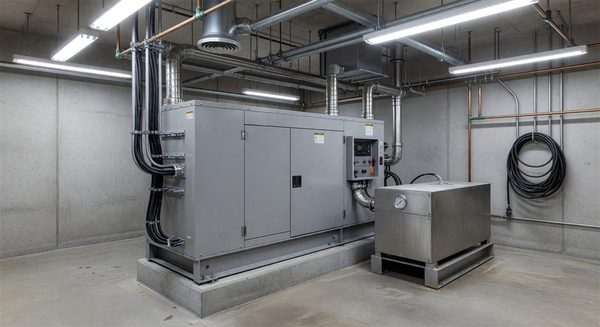
Life safety minimum: Required by code (NEC Article 700, NFPA 99, NFPA 101), this is the emergency power system that must activate within 10 seconds of normal power loss. Life safety loads include: exit and emergency lighting, fire alarm systems, fire pump (where installed), elevator Phase I recall (one elevator to reach all floors), and public address systems. Life safety generators are sized for this specific load — typically much smaller than a full-load backup generator.
Full-load or partial-load backup: An operational continuity generator maintains some or all hotel operations during an outage — guest room lighting and HVAC, HVAC for critical areas (server rooms, food storage), PMS and front desk systems, kitchen equipment, elevators for normal operation. Full-load backup generators are substantially larger and more expensive than life-safety generators.
Most hotels operate with life safety emergency generators (code requirement) and have decided whether to invest in additional operational continuity capacity beyond that minimum. The ROI calculation depends on power outage frequency and duration in the property’s market, the cost of lost revenue and guest compensation during extended outages, and the property’s guest mix (events and group business may create contractual obligations to maintain power).
Generator Sizing and Load Analysis
Proper generator sizing requires a formal electrical load analysis. A licensed electrical engineer should:
- Document all electrical loads in the hotel with nameplate ratings
- Identify which loads are critical (must be powered for operations or life safety) versus deferrable
- Calculate demand factor for each load category (not all loads run simultaneously at full nameplate rating)
- Determine generator rating in kW that supports the defined critical load with appropriate reserve capacity
Common sizing errors:
- Sizing to nameplate ratings without demand factor analysis (significantly overestimates required generator capacity)
- Failing to account for motor starting loads (large motors require 3–6× running current to start — the generator must handle this surge without voltage collapse)
- Not reserving 20–25% of rated capacity as buffer for future load growth or peak demand periods
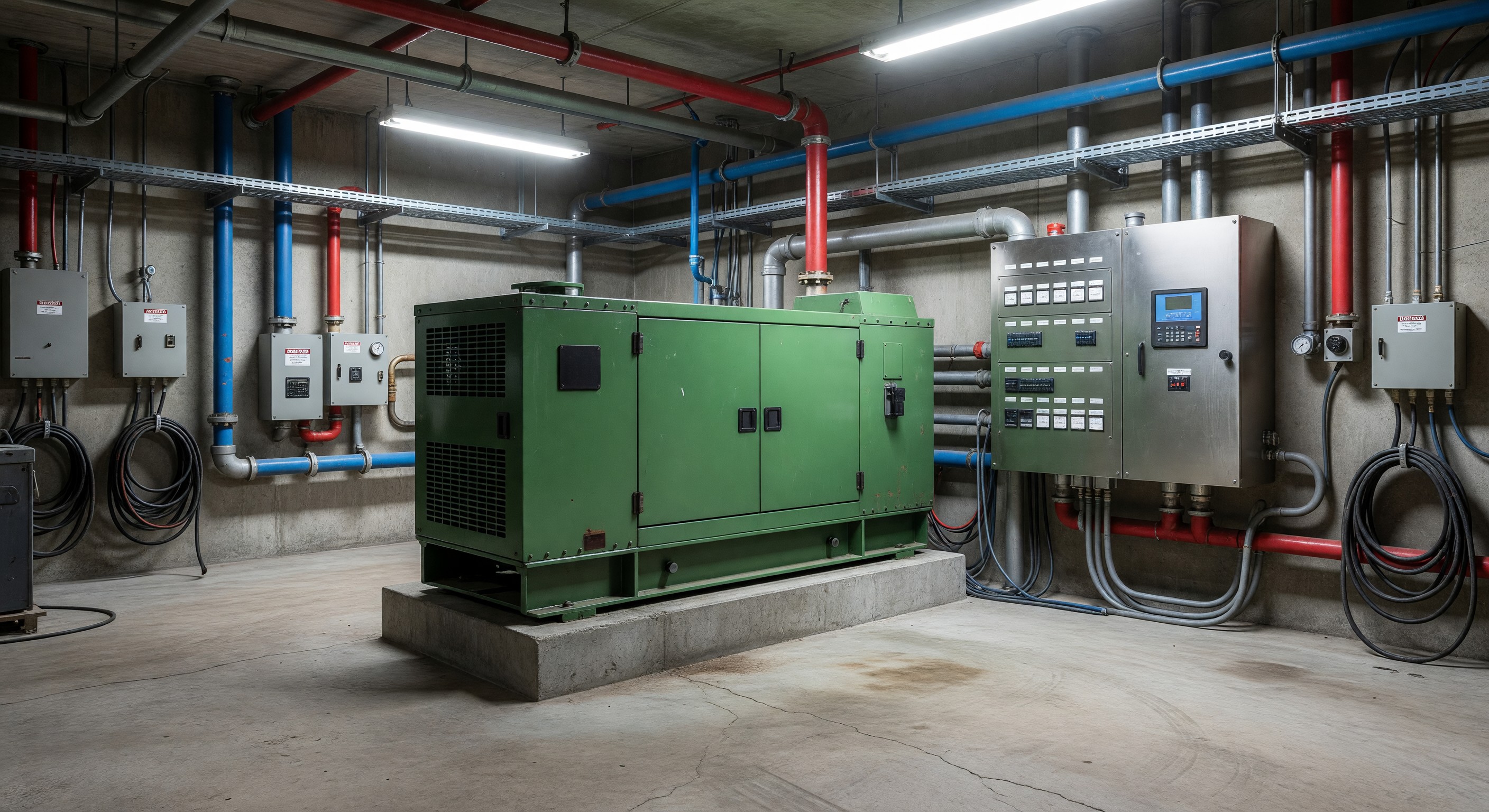
For hotels, a full-load backup generator serving an entirely diesel generator-powered property during an outage is typically 500–2,000 kW depending on property size and HVAC configuration. Life safety generators for a mid-size hotel are typically 100–400 kW.
Automatic Transfer Switch (ATS) Maintenance
The automatic transfer switch is the mechanical and electrical device that detects loss of utility power and switches the connected loads to generator power. ATS maintenance is critical — a generator that runs correctly but fails to transfer because of ATS failure provides no value in an actual outage.
ATS maintenance requirements (NFPA 110 standards):
- Monthly: Verify generator starts and produces correct voltage and frequency; verify ATS is in normal (utility) position; check ATS for evidence of overheating, corrosion, or contamination
- Annually: Full transfer test with the ATS switching loads from utility to generator and back; inspect ATS contacts for wear, pitting, or arcing; test time-delay settings; lubricate mechanical components
- Every 5 years: Comprehensive infrared thermography scan of ATS contacts under load; contact resistance measurement; possible contact cleaning or replacement depending on findings
Fuel Management
Diesel-powered hotel generators require fuel management programs that ensure adequate fuel is available when needed — particularly during extended events when fuel delivery may be disrupted:
Storage capacity: Hotels in hurricane-prone areas or with critical operational continuity requirements should maintain 7–14 days of fuel storage at design load consumption. A 500 kW diesel generator at 50% average load consumes approximately 50 gallons per hour — 1,200 gallons per day — requiring substantial storage tank capacity for extended run scenarios.
Fuel quality management: Diesel fuel degrades over time. Stored diesel should be treated with stabilizer and biocide products (to prevent microbial growth in water-contaminated fuel). Fuel should be tested annually for moisture content, microbial contamination, and fuel stability. Fuel polishing (filtration and conditioning of stored fuel) is recommended every 3–5 years for tanks not turned over regularly.
Fuel delivery contracts: Hotels in high-risk markets should maintain a fuel delivery contract with priority delivery terms for declared emergencies. Fuel availability becomes constrained during regional disasters — hotels with established delivery relationships receive priority over spot customers.
Battery Energy Storage Integration
Battery energy storage systems (BESS) are increasingly deployed alongside or instead of traditional generator backup for certain hotel applications:
UPS (Uninterruptible Power Supply) for critical systems: Server rooms, PMS systems, and network infrastructure require uninterruptible power — even the 10-second delay to start a generator creates data integrity risks. UPS systems provide instantaneous switchover to battery power for these loads.
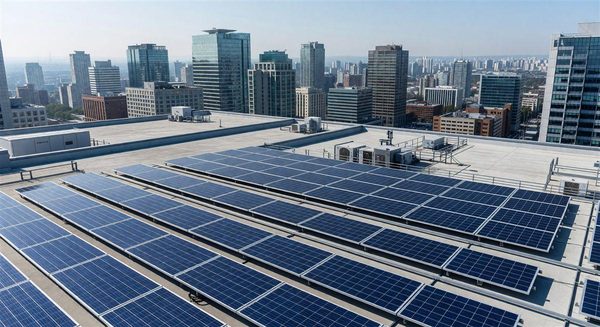
BESS for extended backup: Large-scale battery systems (100–1,000 kWh) can power critical hotel loads for 2–8 hours during outages. When combined with solar generation, BESS can extend backup duration indefinitely in good solar conditions. This approach is particularly relevant for California and other markets with frequent short-duration outages where a few hours of backup capacity covers most events.
Demand response and peak shaving: BESS provides value even during normal grid conditions — discharging during utility peak demand periods reduces demand charges. The combined value of peak shaving revenue and backup capacity can justify BESS investment at favorable economics in high-demand-charge markets.
Resilience Planning Framework
Complete resilience planning for hotel power goes beyond generator procurement:
- Critical load identification: Which functions must continue during an outage for the hotel to remain operational at a basic level? (PMS, front desk communications, key encoding, food storage, some guest room access)
- Manual override procedures: How does staff operate systems without electronic controls? (How to unlock a guest room if the lock server is down? How to process check-in without PMS?)
- Extended outage protocols: At what duration does an outage trigger guest accommodation in another property, refunds, or other service recovery measures?
- Communication plan: How does the hotel communicate outage status to arriving guests, brand support, and ownership during an extended event?
Frequently Asked Questions
How often should hotel emergency generators be tested? NFPA 110 requires monthly exercising of life safety emergency generators — starting the generator and running it under load for a minimum of 30 minutes. Annual full-load testing (with load banks if building loads aren’t sufficient) verifies performance under realistic conditions. Document all tests with date, duration, load level, and any observed anomalies.
What is the lifespan of a commercial diesel generator? Commercial standby generators used for emergency backup (not continuous operation) have service lives of 25–40 years with proper maintenance. Generators in frequent standby operation experience more wear; generators in continuous prime power operation have shorter service intervals. Regular oil analysis, cooling system maintenance, battery replacement (starting batteries: every 3–5 years), and periodic major service (Tier 4 engine service at specified hours) are required to achieve full service life.
Can hotels use natural gas generators instead of diesel? Natural gas generators are available for hotel backup applications. They offer cleaner combustion (lower particulate emissions) and eliminate the fuel storage, fuel degradation, and delivery logistics challenges of diesel. The primary limitation is that natural gas supply may also be interrupted during disasters (earthquakes can damage gas distribution; winter storms have disrupted gas supply in some markets). Hotels in seismically active areas or markets with gas supply vulnerability should evaluate dual-fuel capability (gas primary, diesel backup) or diesel-only backup systems.
What is the difference between a standby generator and a prime power generator? Standby generators are rated for intermittent use during power outages — not continuous operation. They’re sized and rated for periods of activation ranging from hours to days. Prime power generators are designed for continuous operation as a primary power source. Hotel backup generators are typically standby-rated; hotels using generators for continuous service (off-grid locations, construction phase power) need prime-rated equipment. Operating a standby-rated generator continuously will significantly shorten its service life.
Further Reading from Authoritative Sources
- NFPA 110 hotel emergency generator standards and backup power requirements — NFPA 110 (Standard for Emergency and Standby Power Systems) is the primary standard governing hotel emergency generator testing, maintenance, and performance requirements — its inspection frequency and performance standards are cited in all hotel life safety compliance contexts.
- DOE building energy storage and backup power resilience resources — The DOE Buildings program provides commercial building energy storage standards, backup power resilience guidance, and battery system technology resources applicable to hotel BESS investment analysis and grid-resilience planning.