Voice-activated AI assistants in hotel guest rooms have moved from a novelty feature to a practical hospitality technology that leading properties deploy at scale. The technology has matured significantly since early hotel implementations in 2018–2020 — privacy concerns have been addressed through hotel-specific configurations, integration with property management systems has improved, and the practical utility for guests (requesting service, controlling room environment, getting local information) has expanded.
This guide covers the current state of hotel voice assistant technology, the implementation considerations that determine success, and the privacy and operational framework needed before deployment.
Hotel-Specific Voice Platforms vs. Consumer Products
The distinction between hotel-specific voice platforms and consumer devices is important for hotel implementations:
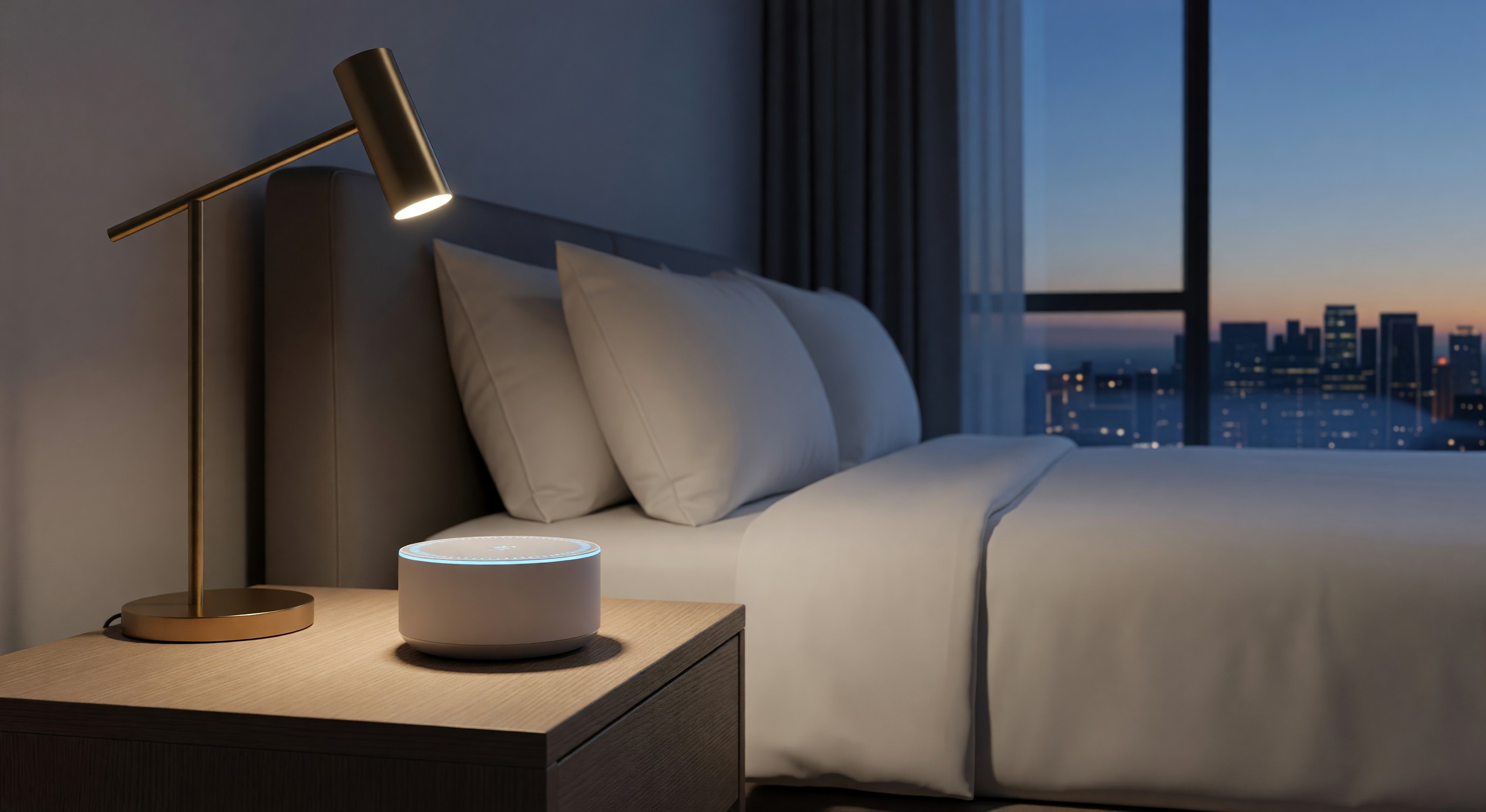
Amazon Alexa for Hospitality: A version of Alexa configured for hotel deployment, with hotel-specific skills (request room service, check out, get local recommendations), integration APIs for PMS and service request systems, and privacy controls that prevent guest history from persisting after checkout. Currently the most widely deployed hotel voice platform.
Google Assistant for Hotels: Less widely deployed in hotel settings than Alexa, but available through partnerships with hospitality technology integrators.
Purpose-built hotel voice platforms: Companies including ALICE (now Actabl), Volara, and others offer hotel-specific voice assistant platforms that run on dedicated hardware and provide deeper integration with hotel operations (service requests, work orders, guest profiles) than consumer platforms with hospitality overlays.
Consumer Alexa/Google Home without hospitality configuration: Consumer smart speakers deployed in hotel rooms without hospitality-specific configuration are problematic — they may retain guest interaction history, lack privacy resets between stays, and don’t provide hotel service integration. Hotels considering voice assistants should not simply purchase retail consumer devices.
Guest-Facing Capabilities
Hotel voice assistants in 2025 provide a range of guest-facing functions:
Service requests: “Alexa, request extra towels.” “OK Google, I need more coffee.” Service requests routed through the voice platform to the hotel’s service request system or PMS are the most operationally valuable use case — capturing requests that guests might otherwise not make (because calling the front desk feels effortful) and routing them efficiently.
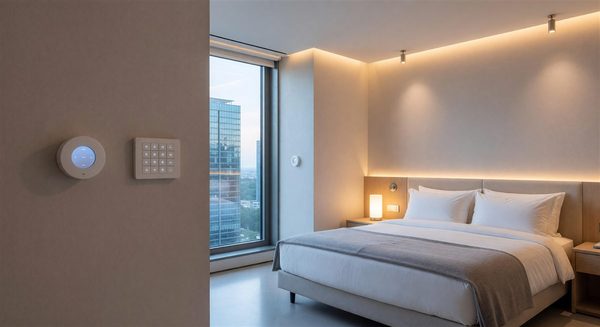
Room control integration: Where voice assistants are integrated with the room’s BAS and lighting control system, guests can control temperature, lighting, and window treatments by voice — “Turn off the lights” or “Set the temperature to 68 degrees.” Integration requires a compatible smart room control system and API connection between the voice platform and room controls.
Information delivery: Local restaurant recommendations, hotel amenity hours, weather forecasts, flight information, and general knowledge queries. The value of information delivery varies by guest profile — international guests unfamiliar with the local area may find this highly valuable; frequent business travelers with local knowledge less so.
Wake-up calls: Voice-commanded wake-up calls are a convenience improvement over calling the front desk. “Alexa, wake me up at 6:30” — the assistant sets a room-side alarm or routes the wake-up call request to the PMS.
Entertainment control: In rooms with integrated TV and streaming systems, voice control of entertainment — “Play HBO Max” or “Find the news” — provides hands-free entertainment management.
Privacy Architecture and Guest Trust
Privacy is the central concern with in-room voice technology. Hotel-deployed voice assistants must address:
Always-on microphone disclosure: Voice assistants that use wake-word detection are always listening for the trigger word. This creates a genuine privacy concern for guests — particularly those with business discussions or personal conversations in the room. Hotels must clearly disclose the presence and function of in-room voice devices, and must provide an easy, visible method to disable the microphone.
Session isolation between guests: Guest interaction history must not be retained between stays. Hotel-configured Alexa and other hospitality platforms perform factory-reset-equivalent operations at checkout (through PMS integration) that clear guest history. This reset must be verified as part of the hotel’s quality assurance process.
Guest data security: Voice interaction data stored in the cloud (on Amazon’s, Google’s, or the hospitality platform vendor’s servers) should be subject to data processing agreements that limit use to service delivery and specify retention limits.
Opt-out without friction: Guests who do not want in-room voice technology should be able to disable or remove the device without penalty or friction. Voice-free room category or a device that can be unplugged should be options.
Disclosure requirements: Several jurisdictions require disclosure when recording or listening devices are present — disclosure in the room confirmation, welcome communication, or in-room card satisfies the disclosure requirement for most jurisdictions.
Integration and Operational Infrastructure
Voice assistants provide operational value only when integrated with hotel systems:
PMS integration: Service requests routed through voice should appear in the hotel’s service request or work order system — not require manual logging by a staff member who receives the request via an intercom or separate system.
Fulfillment tracking: Service request routing through voice should include the same fulfillment tracking as other service request channels — confirmation of receipt, assignment to a team, completion confirmation.
Content management: The hotel-specific information the voice assistant provides (restaurant hours, pool hours, local recommendations) must be configured and maintained. Outdated information delivered by the voice assistant (closed restaurant recommended, incorrect pool hours) creates guest frustration.
Language support: International hotel markets may serve guests who prefer to communicate in languages other than English. Platform language support should be confirmed against the hotel’s guest mix.
Frequently Asked Questions
Do hotel guests actually use in-room voice assistants? Adoption varies significantly by property type and guest demographics. Luxury leisure properties report meaningful engagement — guests use voice for room service requests, local recommendations, and entertainment control. Business travel-oriented properties see lower engagement — business travelers tend to use their own smartphone assistants and are less likely to interact with hotel-provided devices. Properties that actively promote voice capabilities at check-in and through in-room collateral see higher usage than those that deploy without guest education.
What is the total cost of deploying voice assistants across a hotel? Hardware costs (purpose-built hospitality voice devices) range from $100–$300 per device. Software platform costs (hospitality-tier Alexa or purpose-built platform) run $10–$30 per room per month. Integration development for PMS and room control connections runs $10,000–$50,000 depending on complexity. For a 200-room hotel, initial hardware and integration: $40,000–$110,000. Ongoing software costs: $24,000–$72,000 annually. ROI is measured in service delivery efficiency (fewer missed service requests, faster guest request routing) and guest satisfaction improvement.
How should hotels handle a guest who complains about privacy concerns with in-room voice devices? Take the concern seriously, not defensively. Offer to disable the device for the guest’s stay. Explain the privacy protections in place (session reset between guests, hotel-controlled configuration). If the guest prefers, provide an alternative room without voice technology. Do not pressure guests to accept a technology they’re uncomfortable with — the guest’s comfort with their private space is the primary consideration.
What are the leading hotel voice assistant platforms in 2025? Amazon Alexa for Hospitality remains the most widely deployed, with integrations available from most major PMS vendors. Volara (a hospitality-specific Alexa integration layer) provides enhanced operational integration for properties wanting deeper service request routing. ALICE/Actabl’s voice features are integrated into their broader guest messaging platform. Google Cloud’s Dialogflow-based hospitality implementations are available through integration partners. The best platform depends on the hotel’s existing PMS and operational software ecosystem — platform selection should start with integration compatibility rather than feature comparison.
Further Reading from Authoritative Sources
- AHLA hotel in-room technology and guest privacy standards — AHLA provides hospitality industry research on in-room technology adoption, guest privacy standards for voice technology, and technology governance practices applicable to hotel voice assistant deployment and privacy program development.
- HFTP hotel voice technology integration and PMS standards — HFTP provides hospitality technology professionals with voice assistant integration standards, PMS connection requirements, and technology governance frameworks applicable to hotel in-room voice assistant selection and deployment.