ADA accessibility compliance for hotel guest technology spans a broad spectrum: visual fire alarm notification in guest rooms, assistive listening systems in meeting spaces, accessible keypad heights at self-service kiosks, caption capability on in-room televisions, and TTY (text telephone) availability for guests with hearing impairments. These requirements are legal minimums — and thoughtful hotel operators are finding that investing beyond minimums in accessibility technology creates a differentiating guest experience for the 26% of US adults who live with some form of disability.
This guide covers the technology dimensions of hotel accessibility: required systems, optional enhancements that improve the experience for guests with sensory, mobility, and cognitive disabilities, and the planning considerations that keep technology accessible through successive upgrades.
Visual Notification Systems
Guests who are deaf or hard of hearing cannot rely on auditory fire alarms, telephone rings, or wake-up calls. The ADA Standards for Accessible Design and Fair Housing Act require hotels to provide accessible rooms equipped with:
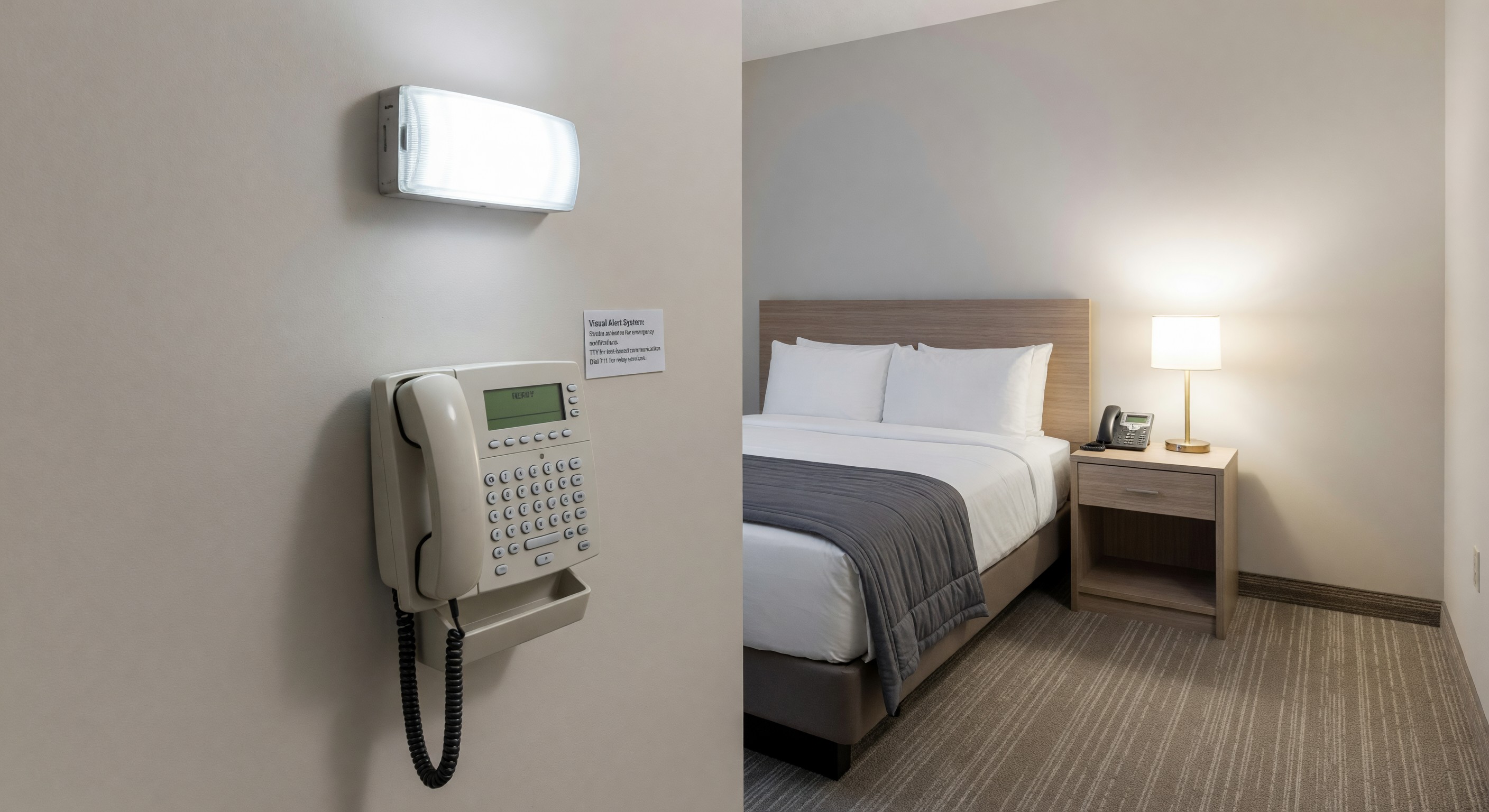
Visual fire alarm notification: Strobe lights in the guest room (and bathroom) connected to the hotel’s fire alarm system. When any fire alarm activates, visible strobe devices alert guests who cannot hear the audible alarm. These devices must be connected to the building-wide fire alarm system — standalone smoke detector-linked strobes don’t satisfy the requirement.
Visual/vibrating doorbell or door notification: Guests who are deaf need to know when someone knocks at the door. Visual notification (flashing room light) or under-door vibration devices connected to the room’s doorbell circuit provide this function.
Visual telephone ring notification: In-room telephones in accessible rooms should be equipped with visual ringers (phone indicator lights) that flash when the telephone rings.
Alarm clock notification: Vibrating alarm clock options or wake-up call systems that include visual phone light notification serve guests who cannot rely on auditory alarms.
ADA Standards establish minimum quantities: hotels with 1–25 rooms need 1 accessible room with visual notification; quantities scale with total room count. Many brand standards require a percentage of rooms in each category (visual notification, roll-in shower, hearing-accessible, etc.) that exceeds ADA minimums.
Assistive Listening Systems
Meeting rooms, ballrooms, and public assembly areas used for presentations and events must be equipped with assistive listening systems (ALS) when they are served by audio systems. ADA Standards require:
- 25% of the total receivers required (minimum 2) to be hearing-aid-compatible (typically neck loop inductive coupled receivers)
- Signage indicating ALS availability
- Staff training on receiver distribution and operation
Technology options: Infrared (IR) ALS is the most common hotel meeting room installation — IR signals don’t penetrate walls, maintaining confidentiality in adjacent meeting spaces. FM loop systems require less maintenance but the signal bleeds through walls. Hearing loop (telecoil) systems are integrated into the flooring or ceiling and are compatible with most modern hearing aids equipped with T-coil mode — increasingly the preferred option for new installations.
Portable systems: Hotels that cannot economically install permanent ALS in every meeting space can maintain portable ALS units for guest checkout on request. This requires tracking inventory and ensuring units are charged and functional.
Accessible Self-Service Technology
Hotels increasingly deploy self-service technology — check-in kiosks, parking payment stations, restaurant ordering terminals — that must be accessible to guests with disabilities.
ADA kiosk requirements: ADA standards (and the Department of Transportation’s CVAA implementation guidance for interactive kiosks) require:
- Operable controls within reach ranges (15–48 inches above floor for side reach; 20–44 inches for forward reach)
- Controls operable with one hand, without tight grasping, pinching, or twisting
- Audio output with headphone jack for private listening
- Text display with sufficient contrast and font size
- Screen readers or voice guidance for guests with visual impairments
Check-in kiosk vendors should provide ADA compliance documentation; verify that the kiosk configuration (mounting height, screen angle) matches the accessible reach range requirements.
Parking payment kiosks: Parking payment equipment accessible to guests in wheelchairs requires accessible mounting height, clear floor space for wheelchair approach, and operable controls within reach range. Equipment vendors should be asked for ADA compliance specifications.
In-Room Television and Media Accessibility
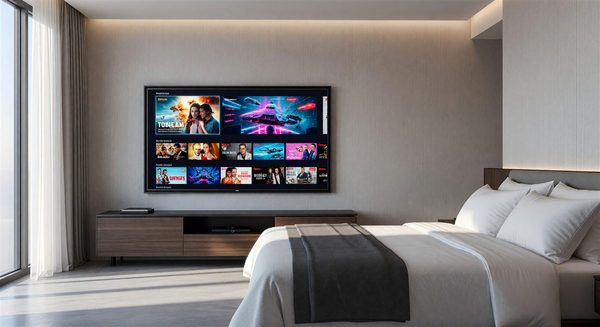
Guest room televisions must support closed captioning, and guests with disabilities must be able to access captioning without requiring staff assistance.
Current standards:
- All televisions must support closed caption display and be capable of decoding caption signals
- Caption on/off should be accessible via the remote without navigating complex menu systems
- Modern hospitality TV systems (LG, Samsung Smart Hospitality, Philips) include accessible menu navigation features
- Interactive television systems (for room service ordering, digital compendium) should be tested for accessibility — complex touch-only interfaces with small targets create barriers for guests with motor impairments
Mobility Accessibility Technology
Technology intersects with mobility accessibility in several ways:
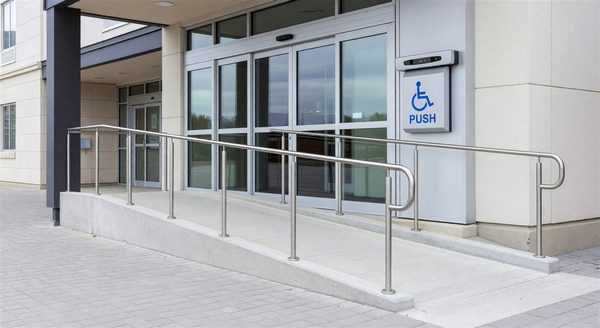
Automatic door openers: ADA requires accessible entry doors to be operable with a closed fist and low operating force. Power door openers (push plates or proximity sensors) at hotel entry doors, elevator lobbies, and accessible restrooms significantly improve the experience for guests with mobility limitations.
Bed transfer technology: Accessible rooms should have beds at 17–19 inch height (seated height for wheelchair transfer). Adjustable-height beds that can be set by the guest allow customization for individual needs.
Roll-in shower bench and grab bars: Technology intersects here primarily in the quality and placement of grab bars that are load-rated and properly anchored — structural engineering consideration as much as product selection.
Door lock accessibility: Room door locks should be operable with limited hand dexterity. Mobile key systems with automatic proximity unlocking (the door unlocks as the phone approaches, without requiring precise tap positioning) improve accessibility for guests with limited fine motor control.
Website and App Accessibility
The DOJ has affirmed through multiple enforcement actions and guidance documents that hotel websites and mobile apps must be accessible under the ADA — generally interpreted as requiring compliance with WCAG 2.1 Level AA guidelines.
Key WCAG requirements for hotel digital properties:
- Alternative text for all images
- Color contrast ratios of 4.5:1 for text
- Keyboard navigability (all functions available without mouse use)
- Screen reader compatibility
- Caption for any video content
- Accessible form design (proper labels for form fields)
Website accessibility lawsuits against hotels have increased significantly since 2019. Conduct an accessibility audit of your hotel website and booking engine using automated tools (WAVE, axe) combined with manual testing with screen readers.
Frequently Asked Questions
How many accessible rooms with visual notification is a hotel required to provide? ADA Standards Table 224.4 establishes the minimum required quantities based on total room count. A 100-room hotel must have at minimum 4 accessible rooms with visual alarms and other notification devices, 1 with hearing-accessible features (TTY, visual notification, alarm clock), and 1 with communication features serving guests who are deaf-blind. These are ADA minimums — many brand standards require additional quantities.
Are hotels required to provide TTY devices in 2024? Yes — the ADA requires hotels to provide guests with hearing impairments equivalent services to those provided other guests, which includes TTY devices for telephone communication. However, the practical reality is that TTY use has declined significantly with the adoption of mobile text messaging, relay services, and video relay services. Hotels must maintain TTY capability; many guests now primarily use their own mobile devices for equivalent communication.
How can hotels better serve guests with cognitive or developmental disabilities? Clear wayfinding (consistent signage, logical space layout, landmark-based directions rather than compass directions), simplified check-in processes, clear communication of what to expect at each step of the stay, and front desk staff training on disability-inclusive communication are the primary practice areas. Technology specifically designed for cognitive accessibility is less developed than for sensory disabilities, but generally: simpler interfaces, larger text, more explicit confirmation steps, and patient staff are the most impactful factors.
What accessibility standards apply to hotel websites and mobile apps? The DOJ has consistently enforced ADA Title III against hotel websites and apps, generally requiring compliance with WCAG 2.1 Level AA. Several state laws (California’s Unruh Act, New York City Human Rights Law) impose additional requirements. The practical standard for legal protection is WCAG 2.1 AA compliance, annual accessibility audits, and a documented accessibility policy with contact information for guests to request assistance.
Further Reading from Authoritative Sources
- ADA Standards for Accessible Design hotel requirements — ADA.gov is the official DOJ resource for ADA standards and enforcement guidance directly governing hotel accessibility technology requirements.
- U.S. Access Board accessibility standards for hotels — The U.S.