Legionella pneumophila, the bacterium responsible for Legionnaires’ disease, is a serious and legally significant water safety issue for hotels. Hotels are consistently identified among the highest-risk settings for Legionella exposure because of their complex water systems, large populations of transient guests (some immunocompromised), and the specific conditions — temperatures between 77°F and 113°F, biofilm accumulation, stagnation — that allow Legionella to proliferate.
A single confirmed case of Legionnaires’ disease traced to a hotel can result in regulatory investigation, civil litigation, media coverage, and significant reputational and financial damage. A proactive Water Management Program (WMP) — designed to identify and control Legionella risk in hotel water systems — is the primary defense against this exposure.
ASHRAE Standard 188 and Regulatory Framework
ASHRAE 188-2021 (Legionellosis: Risk Management for Building Water Systems) is the primary standard for commercial building Legionella risk management. ASHRAE 188 requires covered buildings — including hotels — to develop, implement, and maintain a written Water Management Program.
CMS requirements: Centers for Medicare & Medicaid Services guidance (adopted in 2017) requires healthcare facilities to implement Legionella WMPs per ASHRAE 188 principles. While hotels are not directly subject to CMS, the ASHRAE 188 standard and CMS guidance are regularly cited in litigation as the applicable standard of care for hotels.
State regulations: Several states (Maryland, New York, New Jersey, and others) have enacted Legionella-specific regulations for cooling towers, hotels, or both. New York’s applicable regulations (10 NYCRR Part 4) require registration, inspection, testing, and treatment programs for cooling towers. Hotels in regulated jurisdictions must comply with state-specific requirements in addition to ASHRAE 188.
CDC Technical Assistance: The CDC Legionella Technical Assistance program provides investigation support to health departments investigating Legionellosis clusters. Hotels subject to a CDC investigation face extensive documentation requirements — a well-maintained WMP with testing records is the most important defense.
Water Management Program Structure
ASHRAE 188 specifies a six-step WMP process:
Step 1 — Assemble a Water Management Team: Designate responsibility for the WMP. For hotels, this typically includes the Director of Engineering (program lead), a qualified third-party water treatment consultant, and involvement from Food and Beverage (ice machine risk), Housekeeping (showerhead and fixture flushing), and Operations.
Step 2 — Describe the Building Water Systems: Create flow schematics of all water systems in scope — domestic hot water generation and distribution, cooling towers, decorative fountains, ice machines, humidifiers, pool/spa, and other aerosol-generating systems. The flow schematic is the foundation for risk assessment.
Step 3 — Identify Hazardous Conditions and Control Measures: For each system element in the schematic, identify conditions that could allow Legionella to grow or spread (temperatures in the growth range, stagnation points, biofilm accumulation, dead legs, scale buildup) and assign control measures that address each hazard.
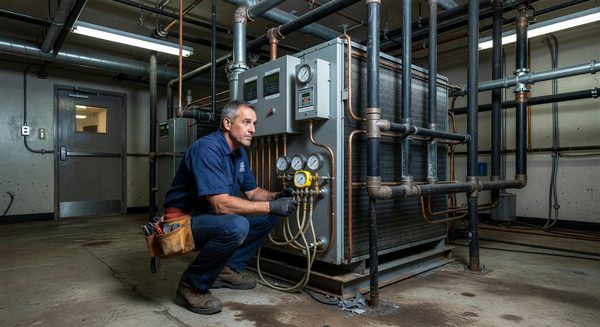
Step 4 — Establish Control Limits and Monitoring Procedures: Define specific measurable parameters for each control measure — hot water delivery temperature (minimum 120°F at point of use), cooling tower biocide residual (chlorine ppm range), cooling tower pH range, and testing frequency.
Step 5 — Establish Corrective Actions: Define response procedures when monitoring identifies out-of-limit conditions — what to do when hot water temperature drops below minimum, when biocide residual falls below target, or when Legionella culture testing returns a positive result.
Step 6 — Establish Verification Procedures and Documentation: Record-keeping requirements, periodic WMP review and update schedule, and annual WMP assessment by qualified personnel.
High-Risk Water System Elements in Hotels
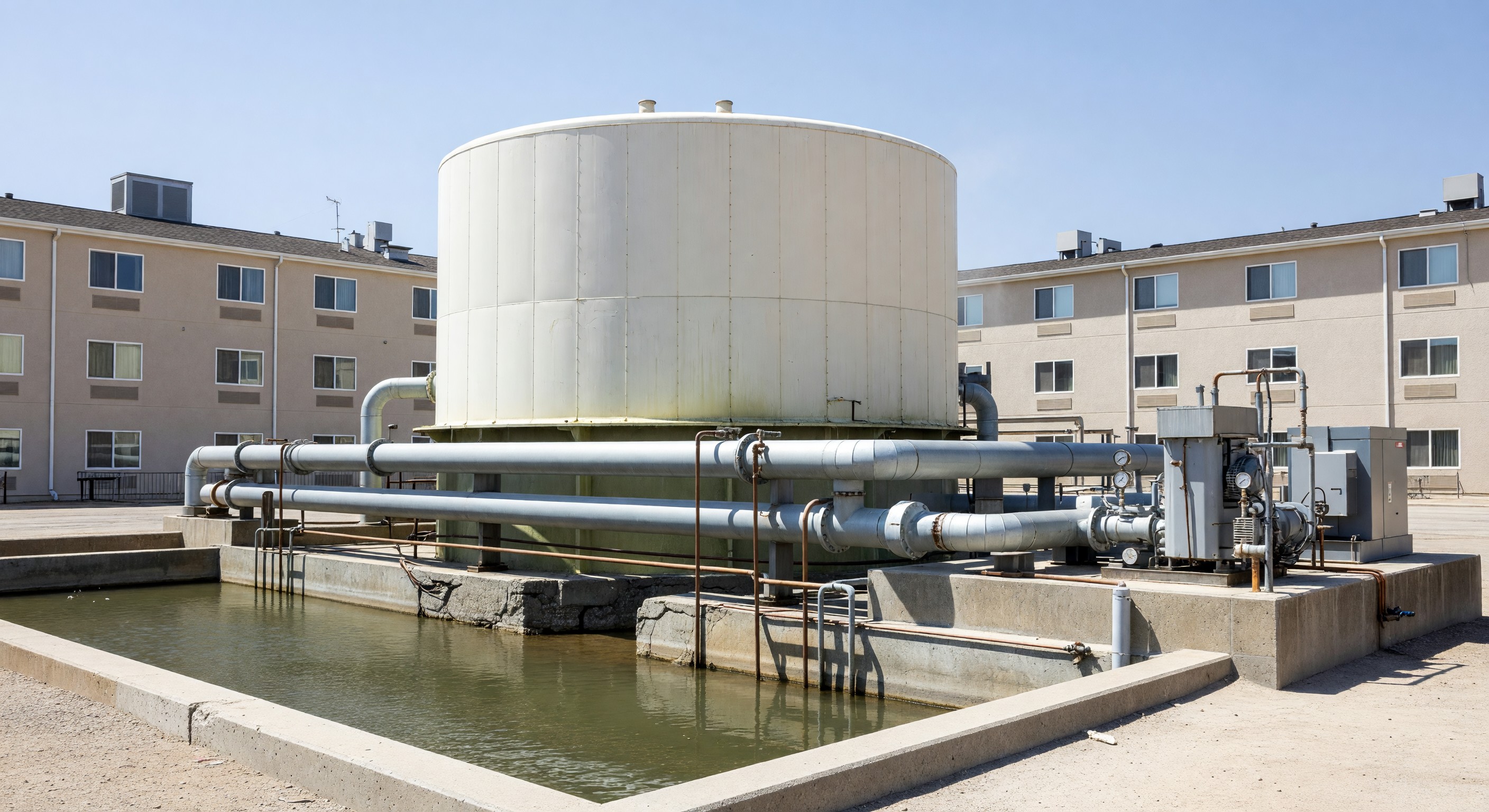
Cooling towers: The highest-risk element in most hotel water systems. Cooling towers aerosolize water droplets that are widely dispersed — anyone in the vicinity of the cooling tower plume can inhale Legionella if the tower water is contaminated. ASHRAE 188 requires cooling towers to receive continuous biocide treatment, regular cleaning (at least twice annually), drift eliminators (to reduce aerosol release), and culture-based Legionella testing at defined intervals.
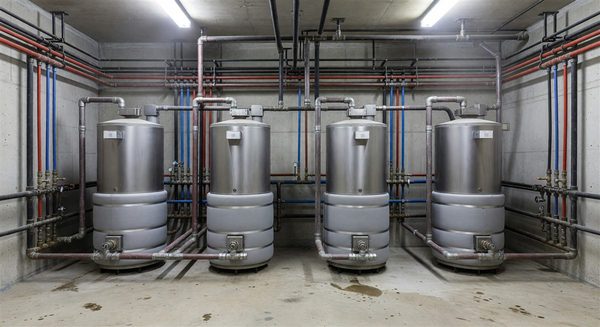
Domestic hot water systems: Hot water stored below 120°F (48.9°C) allows Legionella proliferation. Long distribution lines with low flow (allowing water to cool to growth range temperatures), dead legs, and rarely used outlets (rooms out of service, rarely used lavatories) are common stagnation hazards. Required controls: storage temperature ≥ 140°F with mixing valves to prevent scalding at outlets, periodic flushing of low-use outlets, and temperature monitoring at representative points throughout the distribution system.
Decorative fountains and water features: Aerosol-generating decorative water features with biofilm accumulation are a documented Legionella source. Hotels with lobby fountains, outdoor water features, or splash features near guest areas must include these in the WMP with appropriate treatment and testing.
Ice machines: Ice machines are not aerosol-generating in normal operation but are a Legionella risk through water contamination of the ice production system. Regular cleaning per manufacturer schedule, sanitization of ice bins, and replacement of water filters maintain ice machine safety.
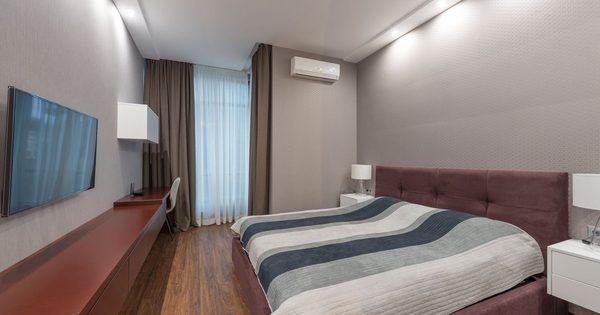
Showers in low-occupancy rooms: Showerheads connected to rarely-used pipes can develop biofilm and Legionella colonization through stagnation. Hotel protocols should include flushing of showerheads and hot water taps in rooms not occupied for more than 7 days — typically before the next guest arrival.
Legionella Testing Programs
Culture-based Legionella testing (sampling water from defined points and culturing for Legionella colony counts) is the primary monitoring method. Testing frequency and locations per ASHRAE 188:
- Cooling towers: Quarterly (minimum) with additional testing following major events (system shutdown, unusual biocide depletion events, extreme weather)
- Domestic hot water: Annual minimum at representative distribution points
- High-risk outlets: After any known water system disruption (pipe work, water main events)
Interpreting results: Legionella culture results are reported as colony forming units per milliliter (CFU/mL). Action levels per ASHRAE 188: less than 1 CFU/mL = no action required; 1–10 CFU/mL = review and corrective action; greater than 10 CFU/mL = immediate remediation. A confirmed Legionella positive above action level in a hotel water system requires immediate notification of the water management team, investigation, and in many jurisdictions, notification of the local health department.
Frequently Asked Questions
Does every hotel need a Legionella Water Management Program? ASHRAE 188 applies to all buildings with complex water systems — which includes virtually all hotels. Most authorities having jurisdiction, insurers, and legal standards of care treat ASHRAE 188 as the applicable minimum. Hotels without a documented WMP are exposed to significant liability if a Legionellosis case is linked to the property. The question is not whether to have a WMP, but whether the program is adequate.
What does a Legionella investigation look like if a guest reports illness? When health authorities receive a report of Legionnaires’ disease, they trace the source through patient interview — hotels visited 2–10 days before symptom onset are investigated. The hotel will receive a request for water testing records, WMP documentation, maintenance records, and access for environmental sampling. Hotels with complete WMP documentation, current testing records, and properly trained staff respond from a much stronger position than hotels whose water management has been informal or undocumented. A proactive WMP does not guarantee no exposure — but it demonstrates reasonable care.
How much does a hotel Legionella Water Management Program cost? WMP development with a qualified water treatment consultant typically costs $3,000–$8,000 for initial program development, flow schematics, and risk assessment. Ongoing costs include the water treatment program for cooling towers ($5,000–$20,000 annually depending on tower count and treatment method), quarterly Legionella culture testing ($200–$500 per sample at 3–8 locations), and annual WMP review. Total annual WMP-related cost for a mid-size hotel is typically $10,000–$35,000 — a fraction of the cost of a single Legionellosis investigation or litigation.
What is the required water temperature for hotel domestic hot water to prevent Legionella? ASHRAE 188 requires storage temperatures of 140°F (60°C) or higher and delivery temperatures at point-of-use of 120°F (48.9°C) minimum, with thermostatic mixing valves reducing temperature to safe levels for scald prevention. Some jurisdictions or standards specify different temperatures — confirm applicable requirements. The OSHA standard for anti-scald protection caps point-of-use temperatures at 120°F for most applications. This creates a narrow operating range: hot enough at distribution to inhibit Legionella, but controlled at the outlet to prevent burns.
Further Reading from Authoritative Sources
- ASHRAE 188 Legionella Water Management Program standard for hotels — ASHRAE 188 (Legionellosis: Risk Management for Building Water Systems) is the primary voluntary standard establishing Water Management Program requirements, temperature control guidelines, and testing protocols applicable to hotel Legionella prevention and compliance programs.
- CDC hotel Legionella prevention and water management guidance — CDC provides Legionella surveillance data, outbreak investigation guidance, and Water Management Program implementation resources directly applicable to hotel Legionella risk assessment, testing protocol selection, corrective action thresholds, and WMP documentation standards.