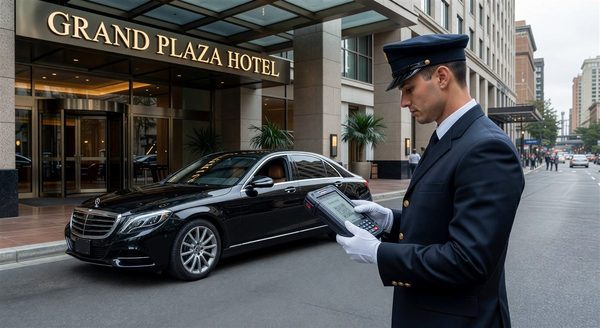
Summer is the high-stakes testing period for hotel parking operations. The combination of peak occupancy, extended guest dwell times, restaurant and event volume from non-resident guests, EV-charger demand from a growing percentage of the vehicle fleet, and staff scheduling pressures under heat-exposure constraints creates a parking management challenge that exposes gaps in any property’s operational planning.
For full-service and upper-upscale hotels — properties that offer both valet and self-park options — summer peak management requires deliberate decisions about how to balance the two services, how to price dynamically across demand windows, how to reserve EV-charger capacity for the right guests, and how to staff for variable arrival-departure patterns that don’t follow the same weekday-weekend rhythm as the rest of the year.
According to AHLA’s State of the Hotel Industry research, U.S. hotel occupancy routinely exceeds 70% nationally in July and August, with top leisure markets and gateway cities reaching 85–90%. Parking systems designed for 60% average-year utilization operate under fundamentally different conditions during these months.
The Summer Demand Profile Is Different
Summer hotel parking demand differs from the rest of the year in three ways that matter operationally.
Extended dwell time. Summer leisure guests — families, couples on vacation, travelers combining business with leisure — park for longer than the corporate transient guests who drive weekday occupancy the rest of the year. A business traveler checking in Monday and out Thursday generates three nights of parking at predictable check-in and checkout windows. A family checking in Saturday and out the following Saturday generates seven nights, with a vehicle that may not move at all during the stay. Multiplied across a full house, this compresses parking inventory at exactly the moments when demand from day visitors, restaurant guests, and event attendees is also at its peak.
Event and restaurant overflow. Summer weekend programming — poolside events, Sunday brunches, outdoor dining — generates episodic demand spikes from non-hotel guests who arrive at unplanned times and compete directly with checking-in room guests for the same surface-level and entry-level parking. A hotel whose lot fills at 11 AM with brunch guests and event attendees may find arriving room guests queuing at the entrance when noon checkout volume hasn’t cleared.
Compressed arrival windows. Summer leisure guests tend to arrive earlier in the day than corporate transients, often well before the 3 PM or 4 PM check-in time. Guests who arrive at noon expecting to check in — and instead encounter a full lot with no valet holds and a 45-minute wait — experience an arrival failure at the start of what they expect to be a vacation.
STR’s hospitality performance data consistently shows that summer RevPAR peaks in July–August for leisure-oriented markets, with room revenue figures that make the parallel parking operation an increasingly visible line item. A hotel generating $300,000 in monthly room revenue in August should expect its parking operation to contribute proportionally — and to cost proportionally in guest satisfaction when it fails.
Valet-to-Self-Park Ratio: Adjusting for Peak Season
Properties that offer both valet and self-park typically operate with a seasonal ratio adjustment that shifts more inventory toward valet during summer peak. The logic is straightforward: valet stacking (vehicles stored two to three deep in a designated stacking area) allows a parking facility to hold 25–40% more vehicles than its striped-space count, and valet operations can prioritize the retrieval order that matches front-desk operations rather than parking availability at the moment of guest arrival.
The operational considerations for summer valet expansion:
Stacking area heat management. Valet stacking areas in surface lots or on upper parking structure decks reach extreme temperatures in summer — regularly 130–160°F on black asphalt in July in Sun Belt markets. Beyond vehicle interior damage concerns (melted electronics, warped dashboards), OSHA’s heat illness prevention requirements mandate that employees working outdoors in these conditions have documented access to shade, water, and rest breaks calibrated to the heat index and physical activity level. A summer valet expansion that ignores heat-exposure protocols creates both OSHA enforcement exposure and rapid attendant turnover at exactly the season when experienced staff retention matters most.
Key control at scale. Expanded summer stacking means more vehicles in active rotation. Key control systems that worked at 40 vehicles per day may fail at 80 — misplaced keys, retrieval delays, and incorrect vehicle staging are direct guest-experience failures that generate review damage disproportionate to their frequency. Properties expanding valet capacity for summer should audit their key control system in May, not July.
Staffing the arrival window. Summer leisure arrivals peak between noon and 4 PM, not at the 6 PM window that suits corporate transient arrivals. Valet staffing models that schedule peak coverage for 6–8 PM will be chronically understaffed during the actual peak arrival window. For a detailed framework on building valet staffing models that match actual arrival distributions and demand curves, see Hotel Valet Parking Operations: Standards, Technology, and Guest Experience.
Dynamic Pricing for Summer Parking
Hotels that operate transient parking (day parking, hourly parking, or event parking available to non-hotel guests) have the most immediate lever for summer demand management: dynamic pricing.
The principle mirrors hotel room rate management: charge more when demand is high and supply is constrained, use the price signal to shift demand to lower-congestion windows. Applied to parking:
Event surcharge windows. When a major event — a summer concert, a local festival, a Sunday brunch sellout — generates predictable non-resident parking demand, a 25–40% event surcharge on transient parking both captures additional revenue and (partially) shifts price-sensitive non-residents to alternative parking. This doesn’t eliminate the demand, but it reduces it.
Early-bird and late-departure pricing. Flat all-day transient rates set at a single price leave revenue on the table during high-demand midday windows. A tiered structure — lower rates for early entry (before 10 AM) and late exit (after 6 PM), premium rates for midday arrival — shifts some demand volume while improving overall capture.
Hotel guest priority pricing. Dynamic pricing on transient inventory must always protect hotel guest access. A pricing system that fills transient spaces at peak-rate revenue while forcing hotel guests to queue is a poor trade — room revenue per guest far exceeds the incremental transient parking revenue from displacing them. Hotel guest parking should be held inventory, not subject to the same dynamic pricing applied to transient demand.
For a full framework on deploying parking revenue management systems that handle these distinctions, AI-Powered Parking Optimization for Hotels covers the current state of demand-forecasting and pricing tools.
EV-Charger Contention: The New Summer Pressure Point
Electric vehicle adoption is accelerating the collision between parking capacity management and energy infrastructure. According to Edison Electric Institute data, EV registrations have grown substantially year over year, and the proportion of hotel guests arriving in EVs — particularly on leisure summer weekends — is now high enough at many properties to treat EV charging as an active capacity management problem, not an amenity footnote.
The summer pressure points specific to EV charging:
Charger monopolization. Hotel guests on long summer road trips may arrive with vehicles that need significant charge and have schedules that don’t require them to move the vehicle for 12–18 hours. A guest checking in Saturday morning who won’t check out until Sunday afternoon may occupy a Level 2 EVSE unit for the full stay. With a typical Level 2 charger taking 6–12 hours to fully charge a depleted battery, that single vehicle occupying a charger represents a meaningful constraint when the hotel has only 4–6 charging stations.
PHEV vs. BEV prioritization. A plug-in hybrid electric vehicle at 80% battery capacity occupying a charger blocks a long-range battery EV guest with 40 miles remaining from the last charging stop. Properties managing charger contention should consider time-of-use policies — maximum charge window of 8–10 hours, or a mandatory move-your-vehicle-when-charged policy — and communicate these to arriving guests.
EV-capable space allocation. The most operationally effective approach is to designate a portion of EV-capable spaces for self-park guests who have confirmed EV vehicles at booking or check-in, with the balance available for any guest on a first-come basis. This prevents the scenario where non-EV vehicles inadvertently occupy EV-reserved spaces during the congested summer arrival window.
Pre-arrival EV communication. Guests who have booked EV parking or noted EV vehicle type in their reservation should receive specific pre-arrival guidance: the number of available chargers, whether advanced reservation of a charger is possible, and the policy on extended occupancy. Surprises at the charger after a long road-trip arrival are significant guest experience failures.
Many hotel brands are now building EV charging capacity requirements into new-construction standards. For operators at existing properties, the U.S. Department of Energy’s Alternative Fuels Station locator and IPMI’s EV guidance provide benchmarks for charging infrastructure planning relative to parking space count.
Overflow Contracts: Pre-Season, Not Mid-Crisis
Overflow parking arrangements are a standard tool for managing event parking spikes throughout the year, but summer peak demands a more systematic approach — not a reactive scramble when a July Fourth weekend produces a full house.
Properties without dedicated overflow arrangements going into summer peak typically improvise when the crisis arrives: calling the municipal garage at 2 PM on a Saturday when the lot filled at noon, turning away arriving guests while pulling together a shuttle plan that doesn’t exist. The result is guest experience damage that would have been avoided by a $500 seasonal agreement signed in April.
Pre-season overflow contracting. Identify adjacent surface lots, municipal garages, and commercial parking facilities within a 5–10 minute walk or shuttle ride of the property. Negotiate seasonal agreements before June — typically structured as a flat monthly availability fee plus a per-vehicle rate, with priority access during defined peak windows. A property with a 150-space lot and strong summer demand should have overflow capacity for at least 30–50 additional vehicles secured by May.
Overflow activation criteria. Define the operational trigger: when the main lot reaches 85–90% occupancy, front desk and parking operations activate the overflow protocol. Waiting until the lot is 100% full and a guest is already stuck at the entrance is too late. The protocol should include real-time communication to front desk staff so they can proactively redirect arriving guests before they reach the parking entrance.
Shuttle logistics for remote overflow. If overflow parking requires a shuttle, define the route, frequency, pick-up and drop-off points, and hours of operation. A shuttle that runs every 30 minutes is not adequate for a checkout surge. Staffing the shuttle adequately for peak windows is a meaningful labor cost — factor it into the overflow economics when comparing against the guest experience cost of turning guests away.
Guest communication. Arriving guests directed to overflow parking should receive a clear, friendly explanation, a map or mobile directions link, and a timeline. “The main lot is full but we have overflow parking two blocks away — here’s the map and our shuttle picks up every 10 minutes” is a manageable experience. Directing a family to a lot they can’t find, with no shuttle and no clear instructions, is not.
Mobile Pre-Arrival Flows: Managing Demand Before Guests Arrive
Pre-arrival communication — delivered via email, SMS, or hotel app notification in the 24–48 hours before check-in — is an underutilized tool for summer parking demand management. The logic is simple: guests who know the parking situation before they arrive can make decisions (choose valet vs. self-park, reserve an EV charger, plan arrival time) that reduce congestion and improve their own experience. Guests who arrive without information make reactive decisions at the worst possible moment.
Effective pre-arrival parking flows for summer operations:
Parking reservation upsell. A pre-arrival email that offers the ability to pre-purchase parking at the standard rate (with a guaranteed space reservation) generates advance revenue and converts the parking commitment from an uncertain arrival-day decision to a completed transaction. For properties with limited inventory, pre-sold parking creates a held-capacity pool that can be managed separately from transient walk-up demand.
Valet vs. self-park decision point. Including the pricing differential and the practical difference between the two options in a pre-arrival communication helps guests make the decision before arrival — rather than at the valet podium when the decision creates delays in the arrival flow.
EV charger notification. Guests with EVs on file in the reservation system should receive a dedicated EV parking section: the number of chargers, any time-of-use policy, and the process for registering their vehicle for a charger upon arrival.
Overflow preparation. If summer demand projections indicate that certain arrival windows may exceed main lot capacity, a transparent pre-arrival message — “Our main lot may reach capacity on Saturday afternoon; we’ve arranged overflow parking at [name] garage two blocks away with free shuttle service” — sets accurate expectations and positions the hotel as organized rather than scrambling.
Modern hotel CRM platforms and PMS systems support segmented pre-arrival communication that can target these messages to the guests who need them (guests with confirmed EV vehicles, guests with longer stays, guests arriving on the highest-demand dates).
Staff Scheduling and Labor Considerations
Parking operations staff — valets, booth attendants, lot supervisors — face the same summer labor market conditions as every other hotel department: higher turnover, competition from seasonal employers, and the direct physical demands of outdoor work in heat.
Summer parking staffing requires:
Lead time on seasonal hiring. Parking attendants need time to learn vehicle layouts, key control procedures, and lot geography before peak season begins. Hiring in March for a June peak allows adequate training and orientation. Hiring in late May does not.
Heat-exposure protocols with documentation. OSHA’s heat illness prevention guidelines are mandatory compliance requirements, not optional best practices. Documented shade access, water availability, and scheduled rest breaks protect both employees and the property from enforcement exposure. The IPMI’s operational resources include heat management protocols developed for parking facility environments.
Retention incentives for peak season. Summer turnover in parking operations is predictable. Properties that offer end-of-season retention bonuses — modest in absolute terms, but meaningful to hourly workers — consistently report lower mid-summer turnover than those that don’t.
Cross-training with front desk and concierge. During peak arrival windows, parking overflow situations require real-time communication between the lot, valet podium, and front desk. Staff who understand each other’s constraints — and have a defined protocol for communicating lot status and overflow activation — respond faster and with less internal friction than departments operating in silos.
For current IPMI benchmarks on parking staffing models, seasonal labor rates, and operational performance standards, see the NPA parking operational resources.
Frequently Asked Questions
How much additional parking capacity can valet stacking add to a full-service hotel?
Well-managed valet stacking typically adds 25–40% capacity above the striped-space count in a dedicated stacking area. The practical ceiling depends on the stacking area’s geometry, the number of active attendants, and retrieval time targets. Beyond roughly 50% over striped capacity, retrieval times typically exceed guest tolerance thresholds (15–20 minutes at most full-service properties) and operational gains are outweighed by guest experience costs.
Should hotels turn away non-hotel parking guests during peak summer weekends?
Generally yes — hotel guest parking access should take priority over transient revenue during capacity-constrained periods. The practical implementation is tightening transient parking hours (no new transient entry after noon on peak Saturdays), raising transient rates to reduce demand volume, or closing transient parking entirely during defined peak windows. The revenue from a handful of transient parkers is not worth the guest experience damage of forcing hotel guests to park off-site.
What is the right valet-to-self-park pricing differential in summer?
A common range is valet pricing at 40–80% premium to self-park daily rates. In summer, when demand supports it, some full-service properties narrow the differential to encourage valet uptake — which gives operations better inventory control — rather than widening it as a pure revenue lever. The goal is to fill valet capacity while leaving self-park as a genuine option for guests who prefer it.
How do hotels manage EV charging fairness when charger demand exceeds supply?
Time-of-use policies (maximum 8–10 hour charge windows) and a move-your-vehicle-when-charged notification system — typically via SMS or hotel app push notification — are the most operationally practical approaches. Some properties have shifted to level-of-charge monitoring that automatically sends a notification when the vehicle has reached 90%, requesting the guest either extend their session or free the charger. Valet operations have a natural advantage: the attendant can physically relocate a fully charged vehicle.
How do hotels manage parking when occupancy is 100% and no spaces remain?
Established overflow protocols — relationships with nearby garages or surface lots, walking-distance maps, partner shuttle arrangements — should be documented and tested before summer rather than improvised during a full-house weekend. Front desk staff should be trained to offer overflow options proactively, not as a last resort after a frustrated guest has reached a full entrance.
What technology changes most improve summer parking operations?
License plate recognition (LPR) at entry reduces transaction friction during high-volume arrival windows. Digital valet management platforms improve key control and retrieval sequencing. Pre-arrival parking reservation capability reduces walk-up demand uncertainty. But the highest-leverage summer improvement is typically not technology — it is earlier-start staffing that matches the noon–4 PM leisure arrival window, which most properties chronically understaff relative to the 6–8 PM window optimized for corporate transient arrivals.
Further Reading from Authoritative Sources
- AHLA State of the Hotel Industry — AHLA’s annual industry research provides occupancy and RevPAR benchmarks used for seasonal demand planning, including summer peak performance data across property segments.
- IPMI Parking & Mobility Operations Resources — the International Parking & Mobility Institute’s operational library covers heat management protocols, staffing models, EV charging guidelines, and revenue management frameworks for parking facility operators.
- NPA Parking Operations Resources — National Parking Association resources on operational benchmarks, seasonal staffing, and revenue management standards for parking facility operators.
- U.S. DOE Alternative Fuels Station Locator and EV Infrastructure Data — EV charging adoption data and infrastructure benchmarks useful for hotel EV capacity planning.
- STR Hotel Performance Data — STR’s hospitality performance benchmarks provide occupancy, ADR, and RevPAR data by market and season, including the summer peak performance data relevant to parking demand correlation.