Hotel parking operations frequently leave significant revenue uncaptured — not through any single obvious failure, but through a combination of procedural gaps, system misconfigurations, and unauthorized complimentary parking that accumulates over time. A structured parking revenue audit identifies these gaps and quantifies the revenue impact, providing the business case for operational and technology improvements.
For most full-service hotels in markets where parking is a paid amenity, parking revenue represents 5–15% of total revenue. Revenue leakage of even 10–15% of parking revenue is a meaningful number — worth the effort of systematic audit.
The Revenue Leakage Framework
Hotel parking revenue leakage falls into several categories:
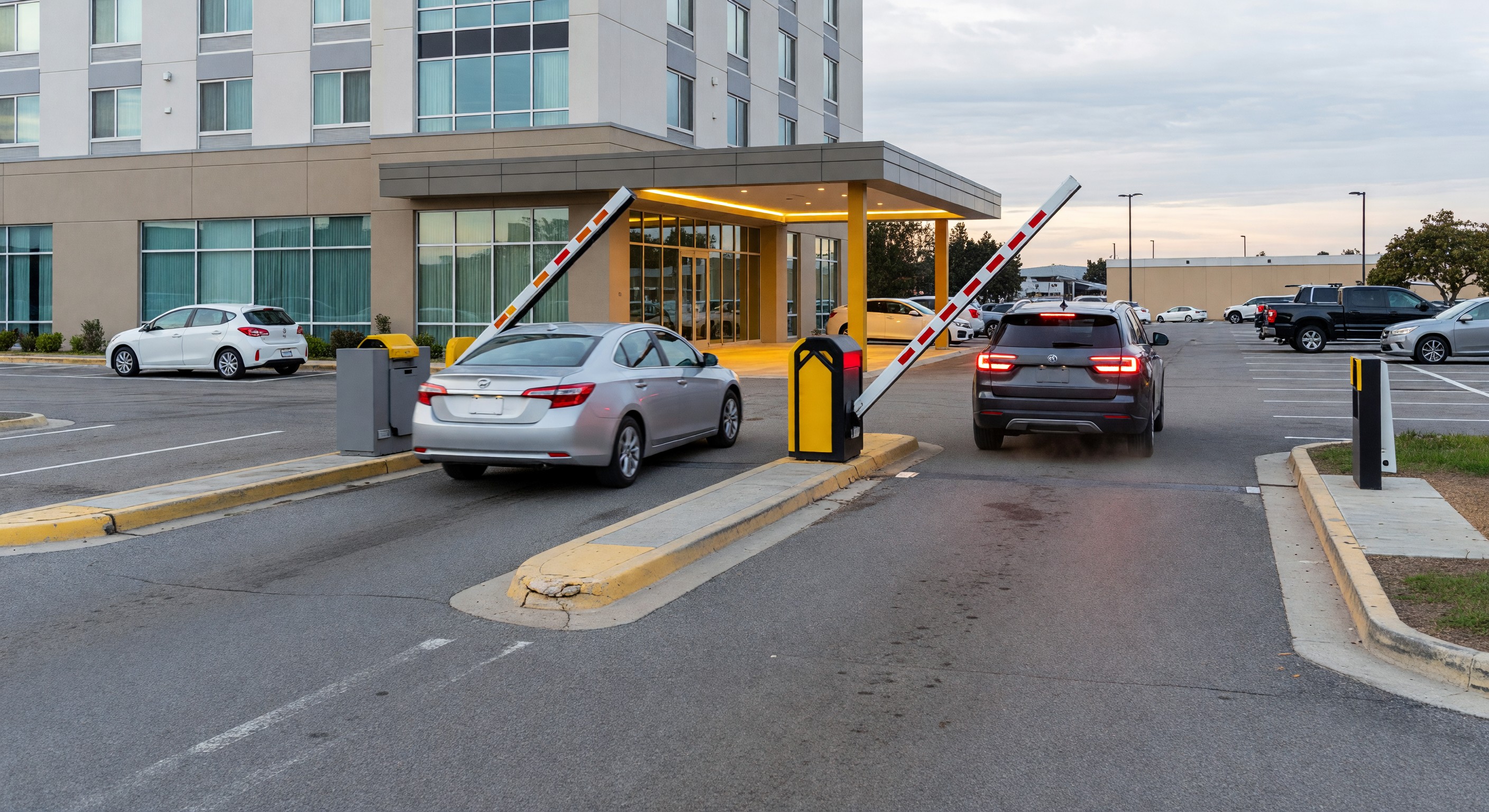
Transaction gaps: Vehicles that enter and park but generate no transaction. Causes: tickets lost by guests (exiting without paying, or receiving an exception); unauthorized operator-granted complimentary exits; gate bypass by vehicles that tailgate through the gate; vehicles that exit through a broken or raised gate during a system malfunction.
Rate integrity failures: Vehicles that exit paying less than the applicable rate. Causes: incorrect rate configuration in the parking management system (seasonal rates not updated, weekend rates not activating correctly); operator overrides of the correct rate without authorization; rate structures with unintended gaps (a long-stay rate cap that allows a 5-day vehicle to pay no more than 2 days’ rate).
Unauthorized complimentary: Parking exemptions granted without authorization. Causes: front desk staff issuing parking validations beyond their authorization; operator-level comps granted informally to acquaintances or to resolve complaints without management approval; vendor vehicles receiving complimentary access that was approved for a limited period but never terminated.
Folio posting gaps: Parking charges that should post to guest folios but don’t. Causes: PMS-parking integration failure (transactions not flowing from parking system to PMS); manual folio posting processes where parking charge is missed; guests who paid separately for parking but where the transaction is double-counted in occupied room analysis.
Audit Methodology
Step 1 — Compare parking transactions to occupied rooms
Pull from the parking management system: total vehicles entered, total vehicles exited, total transactions, total revenue by date for the audit period (typically 30–90 days).
Pull from the PMS: occupied room nights by date, rooms sold with parking included in rate, rooms where parking was added as a folio item.
Calculate: Expected parking transactions ≈ (Occupied rooms × parking attachment rate) + external/day parkers. Compare to actual transactions. A significant gap (actual transactions substantially less than expected) suggests transaction leakage.
Step 2 — Audit complimentary transactions
Export all complimentary parking transactions from the parking management system. For each comp transaction: Was it authorized? By whom? Does it align with hotel policy (validation limit per room, complimentary parking for specific guest categories)?
Flag: Complimentary transactions without authorization documentation; patterns of comp transactions by the same operator ID (suggesting systematic unauthorized comps); comp transactions above the authorized daily or weekly limit.
Step 3 — Rate audit
Review current rate configuration in the PARC system. Verify:
- Are all rates currently active (no expired seasonal rates still showing as active)?
- Does the rate structure have unintended gaps that allow significant undercharging for specific stay lengths?
- Are weekend/weekday differential rates activating at the correct times?
- Are valet vs. self-park rates correctly differentiated?
Test the rates by manually running scenarios through the rate calculator and comparing to expected charges.
Step 4 — Transaction gap analysis
From PARC system: total vehicle entries vs. total exits vs. total transactions. The difference between entries and completed paid transactions is the population of vehicles that entered and did not generate revenue. Investigate: lost ticket transactions (how many? Is the lost ticket fee policy adequate to deter this as a revenue leakage method?); exception exits (authorized? Documented?).
Step 5 — Physical audit
Observe actual parking operations: Are gates functioning correctly? Are entry/exit timestamps accurate? Do operators follow established procedures for exceptions? Is there tailgating at the entry gate that’s not being detected?
Revenue Optimization Beyond Leak Plugging
Audits that identify leakage address the floor of parking revenue. Optimization addresses the ceiling:
Rate structure review: Is the current rate structure capturing the available market? If competitors are pricing higher without losing transient demand, rates can be increased.
Pre-arrival reservation: Converting guests from paying at exit to pre-paying at reservation time improves revenue predictability and reduces transaction processing friction. Hotels with modern parking systems can integrate parking reservations into the hotel booking engine.
Ancillary revenue: EV charging premiums, reserved spot premiums (near elevator, covered vs. uncovered), and valet premiums represent revenue above the base parking rate. Are these being maximized?
Modern PARCS platforms are designed with the reporting and audit capabilities that make revenue integrity monitoring ongoing rather than a periodic manual exercise — providing transaction-level audit trails that identify leakage in real time rather than after the fact.
Frequently Asked Questions
How much parking revenue leakage is typical at hotels? Properties without active revenue monitoring and strong operational controls can experience 10–25% leakage relative to theoretical maximum revenue. Properties with LPR-integrated systems, automated folio posting, and regular audit review typically limit leakage to 3–8%. The gap between a well-managed and poorly-managed parking operation at a 200-room hotel in an $18/night parking market can represent $50,000–$150,000 in annual revenue difference.
What is the most common source of unauthorized complimentary parking at hotels? Front desk staff granting parking validations for guest relations purposes — addressing complaints, accommodating loyalty guests, or managing VIP situations — without following the authorization protocol. This is usually not malicious but represents an undocumented cost that accumulates. The solution is a clear complimentary parking policy with authorization requirements, tracking of all comps against the authorizing team member’s ID, and periodic reporting that surfaces patterns for management review.
Should hotels conduct parking revenue audits internally or hire consultants? A structured internal audit (using the methodology above) can identify most leakage without external assistance if the parking management system provides adequate reporting. For properties where parking revenue is significant (greater than $500,000 annually) or where existing internal controls are known to be weak, engaging a hospitality revenue auditor with parking expertise may identify issues that internal staff miss — and provides independent documentation of findings that supports operational and capital investment decisions.
How often should parking revenue audits be conducted? A full audit (all steps above) should be conducted annually, or following any significant change — new PARC system, new management, expansion of complimentary parking policies, major rate structure change. Ongoing monitoring (monthly transaction reconciliation, monthly comp transaction review, regular PARC system rate configuration verification) maintains visibility between full audits. Properties that review parking KPIs monthly catch leakage early rather than discovering it at annual audit.
Further Reading from Authoritative Sources
- HFTP hotel parking revenue management and audit standards — HFTP provides hospitality technology professionals with parking revenue management standards, audit methodology frameworks, and PARC system evaluation guidance applicable to hotel parking revenue audit design and ongoing revenue integrity monitoring.
- AHLA hotel parking operations and revenue integrity standards — AHLA provides hospitality industry guidance on parking operations management, revenue integrity standards, and operational control practices applicable to hotel parking revenue audit program design and complimentary parking policy development.