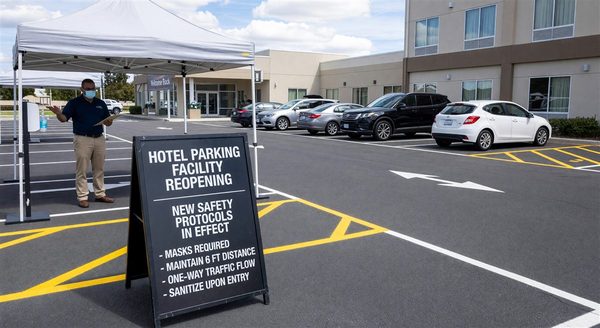
The pandemic accelerated a transformation in hotel parking that had been building for years: the move toward contactless, frictionless guest experience at every touch point. Guests who in 2019 might have tolerated a paper ticket, a manual validation stamp, or a cashier window now expect the same digital-first experience they get from app-based parking in major urban markets.
For hotel facility managers and parking operations teams, contactless parking technology delivers dual benefits: improved guest satisfaction scores and measurable reduction in labor costs and revenue leakage. This guide covers the primary contactless parking technologies available to hotels, their implementation considerations, and how they integrate with broader hotel operations.
License Plate Recognition as the Foundation
License plate recognition (LPR) technology has become the enabling foundation for most contactless parking implementations. When the system knows a vehicle’s license plate at entry, all subsequent transactions — payment, validation, hotel guest verification, monthly permit management — can be associated with that plate record without requiring the guest to interact with equipment or staff.
LPR cameras mounted at entry and exit lanes capture plate images and use optical character recognition (OCR) software to convert the image to an alphanumeric record. In hotel parking contexts, the plate record links to:
- Hotel guest folios: When a guest provides their vehicle plate at check-in (or via pre-arrival communication), the PMS links the plate to the reservation. When that vehicle exits, parking charges post automatically to the room folio — no validation required, no transaction at the exit lane, no cash or card handling.
- Pre-paid reservation: Guests who book parking with their room reservation or via a pre-arrival email receive an LPR-enabled entry — they drive in, and the system recognizes their plate as a pre-paid reservation. Exit is equally frictionless.
- Monthly permits: Permit holders receive LPR entry access — their plate is in the authorized list. No key card, no transponder, no interaction required.
LPR accuracy is typically 95–99% for clean plates under good lighting conditions. Dirty plates, specialty or obscured plates (U.S. motorcycle plates, some novelty designs), and extreme lighting conditions (direct sunrise/sunset glare) generate misreads that require fallback processes. Design for these exceptions — a HELP button with intercom capability at each lane provides the guest assistance path.
Mobile Payment and App-Based Access
Standalone mobile parking apps allow guests to initiate and pay for parking sessions from their smartphone. App-based parking sessions provide:
- Cashless payment with card-on-file in the app
- Session management (extend parking remotely, receive low-time alerts)
- Digital validation receipt
Several hotel parking software platforms provide white-labeled mobile parking apps that allow hotels to present branded parking purchasing without requiring guests to download a generic parking app. Integration with the hotel’s loyalty program — parking points, parking credits for loyalty members — is a feature that drives program enrollment and repeat business.
QR code-based parking access — where the guest scans a QR code at entry to begin a session and scans again at exit — provides contactless access without requiring a full app installation. This approach is lower friction for one-time hotel visitors who don’t want to install another app.
Digital Validation
Traditional parking validation involved a physical stamp, sticker, or punch card. Digital validation replaces these physical processes with electronic records that automatically apply discounts or complimentary parking when triggered by qualifying transactions.
In hotel applications, digital validation works as follows: the hotel restaurant, spa, or event records the guest’s plate number at the time of service (or the guest provides it). The parking system applies the validation discount automatically when that plate exits — no sticker required, no interaction at the exit lane. Some systems integrate validation directly into the hotel’s POS system, automatically capturing the plate from a linked parking session when the restaurant check is settled.
Digital validation eliminates the revenue leakage common with paper validation programs: blank validation stamps used by non-customers, stamps applied to extend beyond qualifying purchase minimums, and lost or shared stamps are all prevented.
Integration with Hotel Systems via Modern PARC Platforms
Modern hotel parking access and revenue control (PARC) systems now offer API-based integration with hotel PMS platforms, enabling the automated folio posting, loyalty recognition, and pre-arrival parking reservation workflows that make contactless guest journeys possible.
When evaluating PARC systems for a hotel upgrade, integration capability with your PMS should be a primary criterion. Ask specifically:
- Does the system offer direct integration with your PMS, or require a middleware layer?
- Can parking charges post automatically to room folios in real time?
- Does the system support pre-arrival parking reservation workflows?
- Can parking data flow back to the PMS for loyalty point calculations?
Properties that lack PMS-integrated parking face significant manual reconciliation labor — front desk staff manually posting parking charges to folios is both time-consuming and error-prone.
Implementation Considerations
Retrofitting contactless technology into existing parking facilities requires attention to:
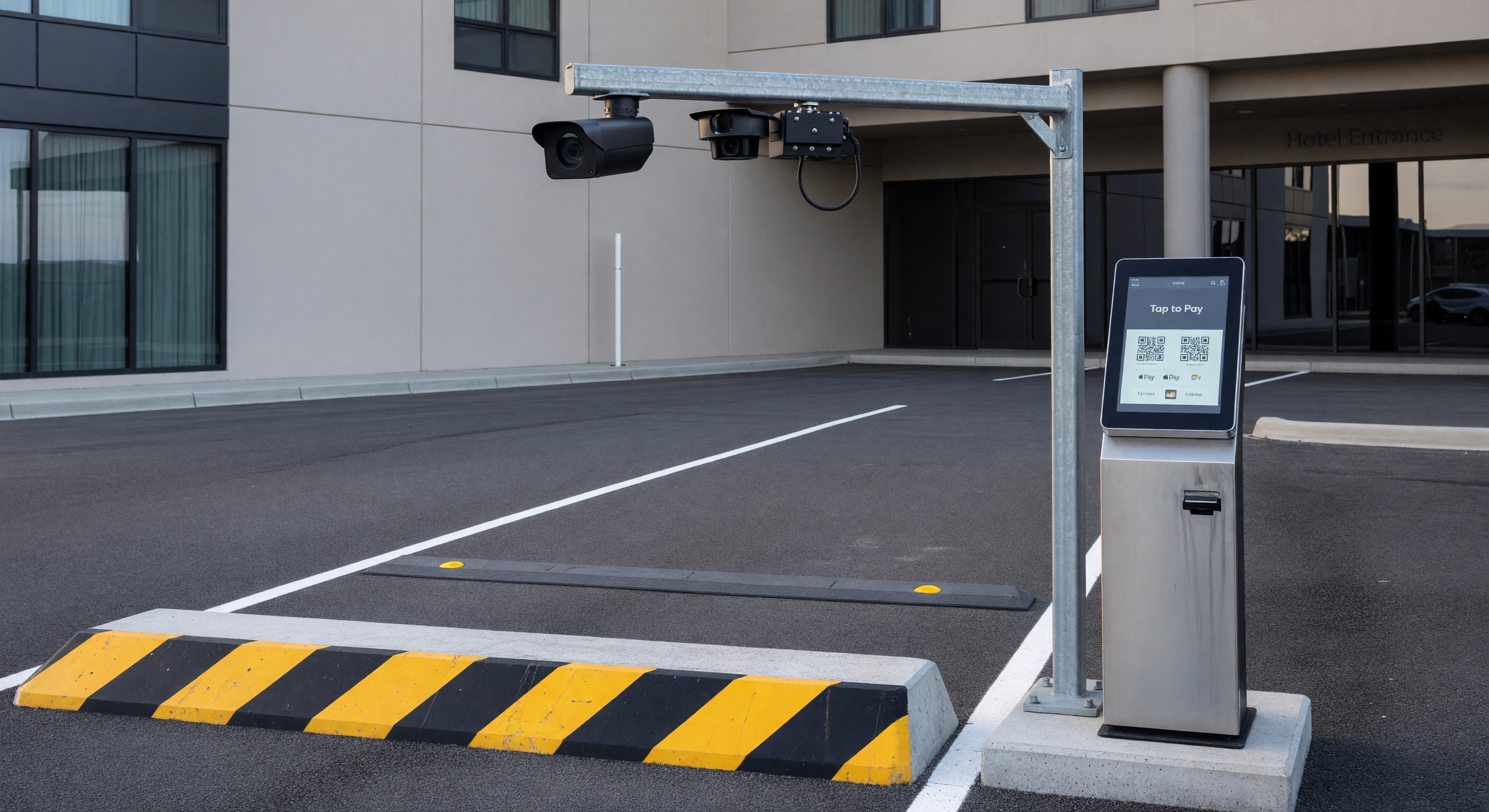
Camera positioning: LPR cameras must have clear sight lines to license plates at consistent heights and speeds. Entry lane camera positioning typically requires 3–15 feet from the plate at angles optimized for the vehicle approach path.
Network connectivity: LPR and payment systems require reliable wired or cellular network connectivity in parking facilities that often have marginal WiFi coverage. Underground garages may require network repeaters or cellular signal boosters.
Fallback processes: Every contactless parking system must have a reliable fallback for technology failures or guest exceptions. Intercom-assisted exit, manual gate release capability, and payment alternatives (tap-to-pay at exit terminal) prevent guest entrapment scenarios that generate immediate complaints.
Staff training: Contactless parking reduces but doesn’t eliminate staff interactions. Staff must understand how to assist guests with LPR misreads, expired sessions, and payment exceptions.
Frequently Asked Questions
What is the ROI of implementing contactless parking technology at a hotel? ROI sources include: reduced staffing (cashier elimination at small properties, reduced staffing hours at larger), reduced revenue leakage from validation fraud, improved guest satisfaction scores (parking is consistently one of the lowest-rated hotel experience elements when it involves wait times or confusion), and potential for ancillary revenue from pre-booked parking upsell. Properties typically see 12–24 month payback periods on contactless technology upgrades.
Can hotels implement LPR parking without replacing the entire PARC system? In some cases, yes — LPR camera overlays can be added to existing systems that have API capability. However, full contactless functionality (automated folio posting, digital validation, pre-arrival reservation) typically requires integration between the LPR system, the payment platform, and the hotel PMS. This usually means upgrading to a modern PARC platform that supports all three.
How should hotels handle guests who don’t have license plates captured correctly by LPR? Design clear fallback paths: a HELP/intercom button at entry and exit lanes, an option to enter a ticket number or confirmation code for guests with pre-paid reservations, and staff-accessible override capability at the hotel’s parking management console. Communication with guests about the LPR process in pre-arrival emails reduces confusion at entry.
What data privacy considerations apply to LPR in hotel parking? License plate data captured by LPR systems is personal data in many jurisdictions. Review applicable state and local regulations (California, several other states have vehicle location data privacy laws). Implement a data retention policy — most hotel parking applications don’t require LPR records beyond 30–60 days after the transaction. Include LPR data collection in your hotel privacy notice if applicable.
Further Reading from Authoritative Sources
- HFTP hotel parking technology integration and PMS standards — HFTP provides hospitality technology professionals with parking system integration standards, PMS connection requirements, and technology governance frameworks applicable to hotel contactless parking system evaluation, selection, and deployment.
- AHLA hotel guest technology and contactless experience standards — AHLA provides hospitality industry research on contactless technology adoption, guest satisfaction drivers, and technology investment standards applicable to hotel parking contactless technology program development and ROI evaluation.