Hotel commercial kitchens present a unique combination of maintenance challenges: heavy-use equipment operating under extreme conditions, strict health and fire code requirements, the operational impact of any equipment failure on food service revenue, and the specialized knowledge required to work on commercial cooking equipment.
For directors of engineering at full-service and upscale hotels, kitchen equipment maintenance is often managed through a combination of in-house preventive maintenance and service contracts with commercial kitchen equipment specialists. Getting the balance right — and knowing what requires specialist attention vs. what can be handled internally — is the core competency.
Commercial Kitchen Equipment Categories
Cooking Equipment
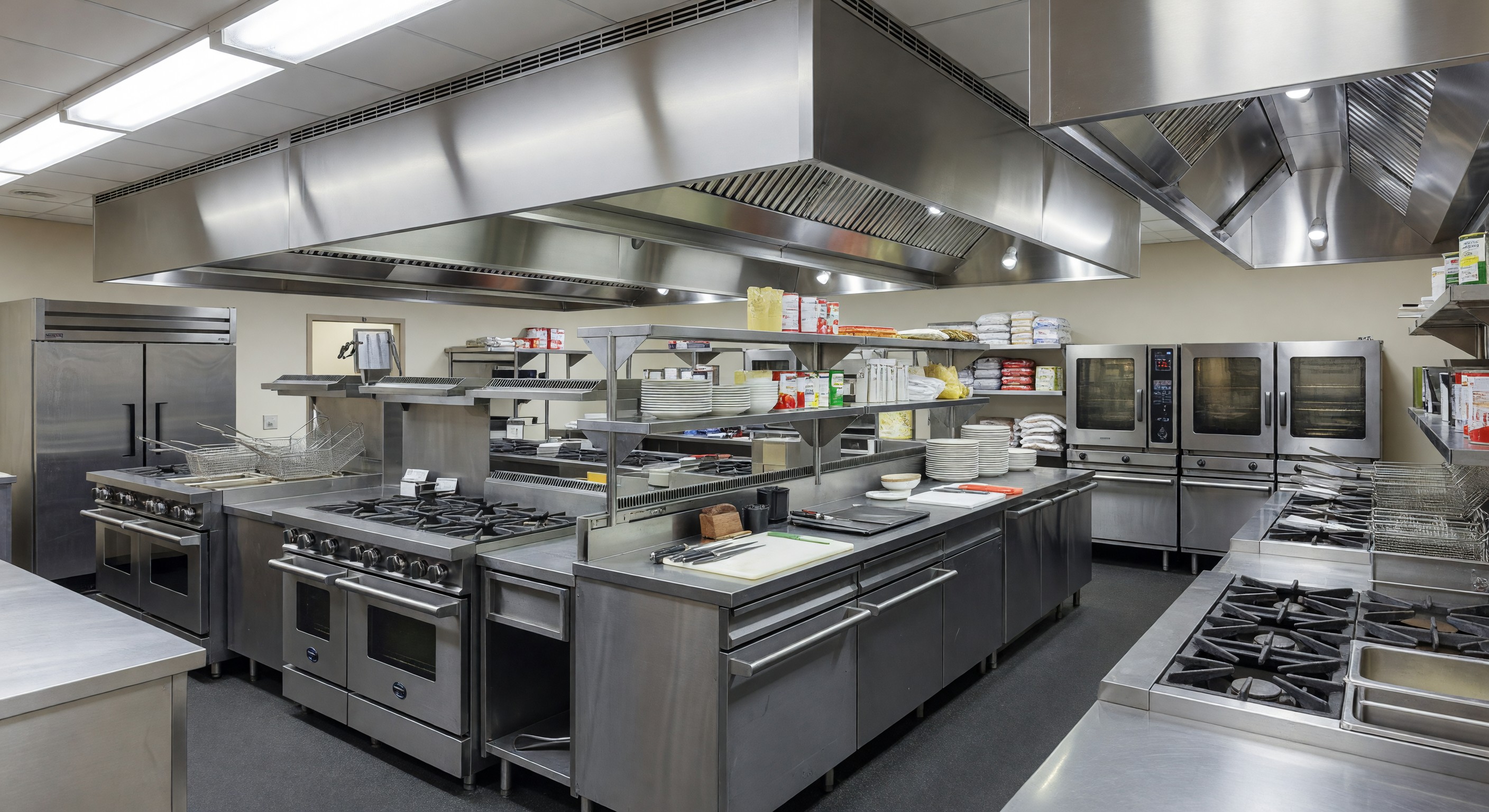
Ranges and ovens: Gas or electric, used continuously during service periods. Most common maintenance issues: burner calibration, thermostat drift, door seal degradation, and igniter failure.
Commercial fryers: High-temperature cooking equipment with significant fire risk. Oil filtration maintenance, thermostat accuracy, and high-limit safety device function are critical maintenance items.
Griddles and flat tops: Require consistent temperature across the cooking surface and calibrated thermostats. Heavy carbon buildup requires regular deep cleaning.
Steamers and steam kettles: Require clean water supply and regular descaling. Mineral scale buildup on heating elements dramatically reduces efficiency and shortens equipment life.
Combi ovens: The most sophisticated cooking equipment in many hotel kitchens. They combine convection oven and steamer functions with a complex control system. Descaling programs must be run regularly; door gasket replacement is a common maintenance item.
Refrigeration Equipment
Walk-in coolers and freezers: The highest-value refrigeration assets in most hotel kitchens. Temperature monitoring, condenser cleaning, door gasket inspection, and evaporator defrost cycle management are key maintenance items.
Reach-in refrigeration: Individual refrigeration units used at preparation stations and service lines. Easier to maintain than walk-ins but often neglected in favor of higher-profile equipment.
Ice machines: High-maintenance equipment that is also high-impact when it fails. Ice machine maintenance is discussed separately below.
Dishwashing Equipment
High-temperature dishwashers: Commercial washers that sanitize through heat (180°F final rinse). Booster heater maintenance and water hardness management (descaling) are the primary maintenance needs.
Chemical sanitizing dishwashers: Lower-temperature machines that sanitize with chemical (typically chlorine) rather than heat. Chemical feed system maintenance and sanitizer concentration monitoring.
Flight-type dishwashers: Large-volume machines for banquet operations. More complex maintenance including conveyor system, curtain replacement, and water temperature monitoring.
Ventilation and Hood Systems
Exhaust hoods: Capture and remove grease-laden air from above cooking equipment. Required to be cleaned to NFPA 96 standards. The single most important fire safety component in the commercial kitchen.
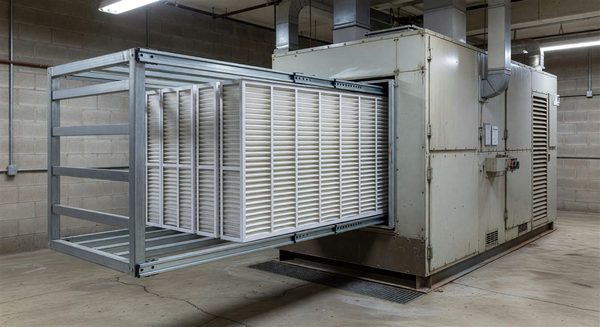
Makeup air units: Supply fresh air to replace the air exhausted by the hood. Undersized or malfunctioning makeup air creates negative pressure in the kitchen that draws unconditioned air from other areas.
Exhaust fans: Move air from the hood through the ductwork to the roof. Fan belt condition, bearing lubrication, and exhaust damper function are maintenance requirements.
Hood Cleaning Compliance (NFPA 96)
Commercial kitchen exhaust hood cleaning is regulated by NFPA 96 (Standard for Ventilation Control and Fire Protection of Commercial Cooking Operations). This is not optional maintenance — it’s a fire and life safety requirement with significant liability implications if not followed.
Required Cleaning Frequency
Cleaning frequency is based on the type and volume of cooking:
Monthly cleaning: Solid fuel cooking (wood, charcoal), or high-volume cooking operations
Quarterly cleaning: High-volume cooking operations such as 24-hour restaurant service
Semi-annual cleaning: Moderate cooking volumes using charbroiler or grilling equipment
Annual cleaning: Low-volume cooking using non-grease-producing equipment (pizza ovens, etc.)
Most hotel kitchens with full-service cooking fall in the quarterly to semi-annual range. Consult with a NFPA 96-certified hood cleaning company to determine the right frequency for your operation.
What Hood Cleaning Includes
A compliant hood cleaning by a certified service provider includes:
- Cleaning the hood interior, filters, plenums, and drip channels
- Cleaning the exposed ductwork as far as accessible (full duct cleaning to the rooftop fan and beyond at periodic intervals)
- Cleaning the exhaust fan
- Inspection of the suppression system nozzles and piping for obstructions
- Documenting the service with a before-and-after sticker affixed to the hood and a service report
Retain all hood cleaning service reports. They’re required documentation for fire code compliance and are among the first things inspectors request after any kitchen fire.
Commercial Refrigeration Maintenance
Walk-In Maintenance Priorities
Temperature monitoring: Install temperature logging devices in all walk-in units. The temperature record is both an operational tool (identifying refrigeration failures early) and a HACCP record for food safety compliance.
Condenser cleaning: Dirty condenser coils reduce heat rejection efficiency, forcing the compressor to work harder and shortening its life. Clean condenser coils semi-annually (monthly in environments with high grease or dust).
Door gaskets: Deteriorated door gaskets allow warm, humid air into the cooler, increasing the refrigeration load and creating condensation. Inspect gaskets monthly and replace when they show cracking, compression set, or gaps.
Evaporator defrost: Frost buildup on the evaporator reduces airflow and heat transfer efficiency. Verify that the defrost cycle is operating correctly and that condensate is draining properly.
Floor drains: Walk-in drain lines must remain clear. Blocked drains allow condensate to accumulate, creating food safety and slipping hazards.
Ice Machine Maintenance
Ice machines are arguably the highest-maintenance piece of equipment in the hotel kitchen — and the most impactful when they fail. Guests who can’t get ice notice immediately.
Cleaning and sanitizing schedule: ASHRAE 12-2000 and most health codes require commercial ice machines to be cleaned and sanitized every 6 months at minimum. Some manufacturers recommend quarterly cleaning. Cleaning involves removing ice, cleaning all surfaces with ice machine cleaner, rinsing thoroughly, and sanitizing before returning to operation.
Scale prevention: Mineral scale on the evaporator plates reduces ice production and eventually damages the equipment. Water treatment (softening or filtration) appropriate to your water hardness, combined with descaling at the regular cleaning interval, prevents scale accumulation.
Air-cooled condenser cleaning: Air-cooled ice machines accumulate dust and grease on the condenser. Monthly cleaning of the condenser prevents efficiency decline.
Bin cleaning: The ice storage bin must be cleaned and sanitized at each 6-month cleaning, and inspected regularly for mold or slime growth.
Ice quality monitoring: Ice machines can harbor Legionella, Pseudomonas, and other bacteria if not properly maintained. Regular cleaning and sanitizing per manufacturer schedule is the prevention measure.
Fire Suppression System Maintenance
The commercial kitchen fire suppression system (typically a wet chemical system) is life safety equipment that requires specific maintenance:
Semi-annual inspection: Required by NFPA 96 and most jurisdictions. A licensed fire protection contractor inspects and tests the system components, checks nozzle positions relative to cooking equipment, verifies fusible links, and confirms that the agent cylinder is at proper weight.
Post-activation inspection: The suppression system must be inspected and the agent cylinder recharged before the kitchen can return to operation after any activation — accidental or real.
Coordination with hood changes: If cooking equipment is repositioned, added, or removed, the suppression system must be re-evaluated to ensure nozzle coverage is correct. This requires the suppression system contractor, not just the kitchen equipment vendor.
Capital Planning for Kitchen Equipment
Commercial kitchen equipment has shorter useful lives than most building systems:
| Equipment Type | Useful Life |
|---|---|
| Ranges/ovens | 15–20 years |
| Commercial fryers | 10–15 years |
| Combi ovens | 10–15 years |
| Walk-in refrigeration | 15–20 years (compressor: 8–12) |
| Ice machines | 7–10 years |
| Dishwashers | 10–15 years |
| Steamers | 8–12 years |
Build a kitchen equipment inventory with purchase dates and integrate it into the 10-year capital plan. Kitchen equipment failures during service periods are among the most operationally disruptive events in a hotel F&B operation.
FAQ
Who should perform commercial kitchen equipment maintenance — in-house or contractors? A hybrid approach works best: in-house engineering handles daily checks, filter cleaning, and minor adjustments. Quarterly PM and repairs require commercial kitchen equipment technicians with refrigeration certification (EPA 608), gas appliance knowledge, and electrical expertise. Hood cleaning requires certified specialists.
What’s the liability exposure if we miss a hood cleaning? Significant. Kitchen fires that occur when hood cleaning is overdue typically result in insurance complications (potential coverage denial), regulatory violation and fines, and liability for any injuries or property damage if the overdue cleaning is found to be a contributing factor. Document every hood cleaning service report and maintain a compliance calendar.
How do we handle a walk-in refrigerator failure that affects food inventory? Immediate response protocol: place a service call, assess whether the contents can be moved to another unit temporarily, contact your food safety team about potential inventory loss, document all food temperatures and decisions per HACCP plan. For recovery, check whether the failure mode (compressor, condenser, etc.) was predictable and whether preventive measures could have avoided the failure.
Should hotel kitchens have backup ice machines? For full-service hotels where ice is a high-demand amenity (bar service, banquet events, restaurant service), a backup capability is appropriate. This might be a secondary ice machine, an agreement with a local ice supplier for emergency delivery, or a portable bagged ice storage arrangement. Plan for failure before it happens.
Further Reading from Authoritative Sources
- NFPA 96 commercial kitchen exhaust hood cleaning standards — NFPA 96 is the primary fire safety standard governing commercial kitchen hood cleaning compliance, fire suppression system requirements, and kitchen ventilation for hotel food service operations.
- CDC food safety and commercial kitchen sanitation standards — The CDC provides food safety and sanitation guidance including HACCP framework implementation, Legionella risk in ice machines, and commercial kitchen equipment hygiene standards applicable to hotel food service operations.