Guestroom audio amenities have evolved more quietly than other room technology — pun noted. While guestroom TVs and WiFi receive regular strategic attention, audio is often addressed as an afterthought or not addressed at all. The result at many properties is a clock radio from 2012 sitting on a bedside table, ignored by guests who use their phones.
For facility managers who manage guestroom technology, understanding what audio amenities guests actually use and what they cost to maintain and replace helps make better decisions about this category.
The Current State of Guestroom Audio
What’s Typically Deployed
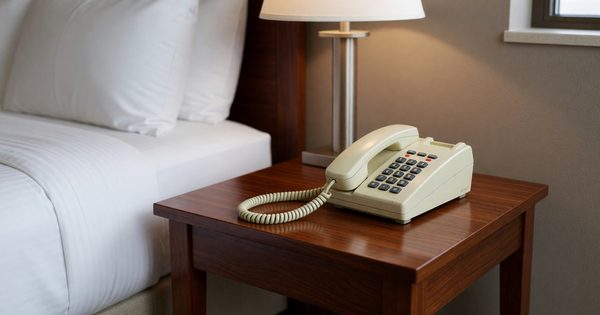
FM clock radio with USB charging: The standard for select-service and many full-service properties. Widely ignored by guests who use their phones as alarms, but still used occasionally. USB-A charging is increasingly inadequate.
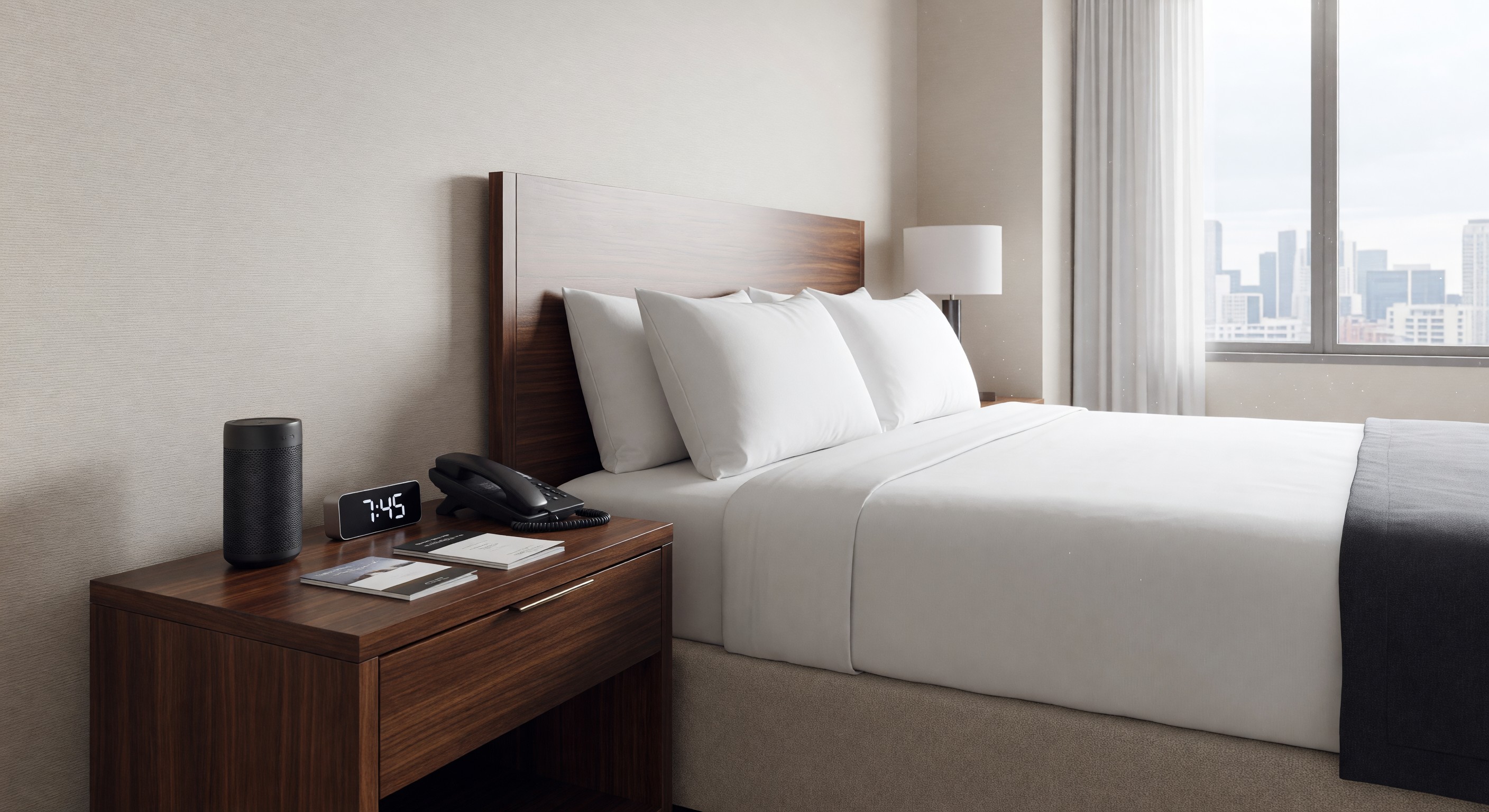
Bluetooth speaker with clock display: The upgraded version that allows guests to connect their phone and play music. Better guest adoption than clock radio only. Battery or charging management is an operational consideration.
Integrated bedside station: A combined charging hub, Bluetooth speaker, and alarm clock. Higher-end option that serves multiple functions from a single device.
Sound bar: Sometimes deployed alongside the TV for better audio quality. Pairs with Bluetooth or HDMI from the TV.
No in-room speaker: Some select-service and budget properties have eliminated in-room audio entirely, providing only a charging outlet.
What Guests Actually Use
Guest research and feedback consistently show:
- Most guests use their smartphone as an alarm rather than the room’s alarm clock
- Guests who listen to music in the room predominantly use their phone’s speaker or personal earbuds
- Bluetooth speaker availability is appreciated when available but rarely sought as a booking criterion
- Clock display is still used for time reference (waking up in the night, checking time quickly)
This pattern suggests that investing heavily in audio amenities has lower guest satisfaction ROI than the same investment in charging capability or WiFi performance.
Bluetooth Speaker Selection and Management
Technology Selection
If deploying Bluetooth speakers in guestrooms, evaluate:
Bluetooth version: Specify Bluetooth 5.0 or later for better range and connection stability. Older Bluetooth versions are more prone to connection dropouts.
Connection approach: Speakers that pair automatically with the last connected device, or that maintain an open pairing state, create the cleanest guest experience. Speakers that require navigating through settings to connect are abandoned.
Sound quality vs. cost: For a bedside speaker in a hotel room, a moderate price point ($40–$80 at wholesale) produces adequate quality. Audiophile-level speakers are unlikely to be appreciated in the typical guestroom context and create significant inventory cost.
Charging configuration: Plugged-in vs. battery models. Plugged-in models are simpler to manage (no battery status to worry about) and work reliably. Battery-powered models are more portable but require monitoring battery health across a fleet of 200+ units.
Alarm functionality: If the speaker replaces the clock radio, verify it has reliable alarm functionality including backup alarm if Bluetooth device disconnects.
Durability and cleanability: The speaker surface must be cleanable with standard hotel disinfecting wipes without damage. Hard surfaces are easier to maintain than fabric surfaces.
Fleet Management
Managing Bluetooth speakers across a hotel fleet is more complex than it appears:
Connectivity troubleshooting: The most common Bluetooth issue is a speaker that’s still “paired” with a previous guest’s device. Guests try to connect and can’t because another device has priority. Housekeeping staff should be trained to reset the speaker’s pairing at every room turnover — either via a specific button or by including in the room reset checklist.
Theft and damage: Portable technology in hotel rooms has a meaningfully higher loss rate than hardwired equipment. Budget for 15–25% annual replacement on portable Bluetooth speakers.
Battery replacement (battery models): Lithium battery capacity degrades over time — a speaker that was reliable for 8 hours of battery life at 18 months may only provide 3–4 hours at 3 years. Include battery health checks in the annual guestroom technology audit.
Model consistency: Maintain consistent speaker models across the property so housekeeping staff and engineers learn one device rather than multiple. When it’s time to replace, transition the entire property rather than mixing models.
Sound Masking for Guestroom Privacy
Sound masking is a different audio technology from the speaker/entertainment category — it’s ambient background noise specifically designed to reduce the intelligibility of neighboring sounds.
Hotel guestrooms in close proximity to corridors, elevators, HVAC equipment, or adjacent rooms are common sources of guest noise complaints. Sound masking systems produce a low-level broadband sound (similar to HVAC white noise) that partially masks intrusive sounds without being perceptible itself.
Hotel applications:
- Corridor-facing rooms where hallway sound is intrusive
- Rooms adjacent to elevator equipment
- Executive floors or VIP areas where noise complaints carry particular weight
- Properties with thin wall construction or poor sound isolation
System design: Sound masking systems use small speakers installed in the ceiling (often above acoustic ceiling tiles). The signal is precisely tuned and calibrated to provide masking effectiveness without being noticeable. This is specialist territory — improper calibration produces audible hiss rather than imperceptible masking.
Cost: Typical installed cost for a hotel-grade sound masking system is $1.50–$3.00 per square foot. For a standard 300 sq ft guestroom, that’s $450–$900 per room — a meaningful investment typically reserved for properties with documented noise issues.
Public Area Audio Systems
While guestroom audio is primarily an amenity decision, public area audio (lobby, restaurant, pool, corridors) is a design and brand expression decision with more facility management implications.
Zoned Audio Systems
Full-service hotel public areas typically have distributed audio systems with multiple zones:
- Lobby
- Restaurant/bar
- Pool
- Fitness center
- Meeting room pre-function
Each zone should have independent volume control and ideally independent source selection. The system is typically managed from a centralized audio system controller.
Life Safety Integration
Public area audio systems must integrate with the fire alarm voice evacuation system. When the fire alarm activates, the building’s normal audio is overridden and evacuation instructions are broadcast through the same speaker network. Verify that this integration is tested in the annual fire alarm test.
Sound System Maintenance
Public area speaker systems are often neglected until a speaker fails and creates an obvious gap in coverage. Include in the maintenance program:
- Annual test of all speakers for output quality and level
- Annual test of the emergency override function
- Replacement of failing speakers before they fail completely
FAQ
Should we provide Bluetooth speakers in all rooms or only premium room types? Deploying in all rooms creates consistency and avoids guest disappointment when a standard room doesn’t have an amenity they expected. However, the theft and replacement cost is significant at scale. A reasonable middle ground: deploy in all rooms above the base category (suites, premium floors, accessible rooms) and make speakers available on request from the front desk for base rooms.
How do we address the clock radio that guests don’t use but we still have to maintain? Consider a phased replacement with a minimal-footprint charging hub that includes a clock display but no radio — lower cost, lower maintenance, and delivers the one function (time display) that still has value. When clock radios fail, replace with a USB-A/USB-C combination charging hub with clock display.
Can we deploy a whole-property background music system that includes guestroom corridors? Yes, and many full-service properties do. Corridor background music at low level creates a better ambient experience than complete silence or HVAC noise alone. The system requires in-ceiling speakers in corridors, a distribution amplifier, and source equipment. Include it in fire alarm integration planning.
What’s the right volume level for hotel corridor background music? Target 55–65 dB at 3 feet from the speaker, measured against the ambient noise floor of the corridor. Too loud is more problematic than too quiet — guests who are sleeping or working in their rooms should not hear corridor music through the door. Test levels at multiple times of day and during your busiest check-in periods.
Further Reading from Authoritative Sources
- AHLA hotel guestroom technology and audio amenity standards — AHLA provides hospitality industry guidance on guestroom technology amenity standards, audio system investment prioritization, and guest satisfaction measurement applicable to hotel audio equipment selection, fleet management, and sound masking deployment decisions.
- NFPA hotel life safety audio system integration and fire alarm standards — NFPA 72 (National Fire Alarm and Signaling Code) establishes the requirements for fire alarm voice evacuation systems and the mandatory integration with public area audio equipment applicable to hotel audio system maintenance programs and annual fire alarm testing compliance.