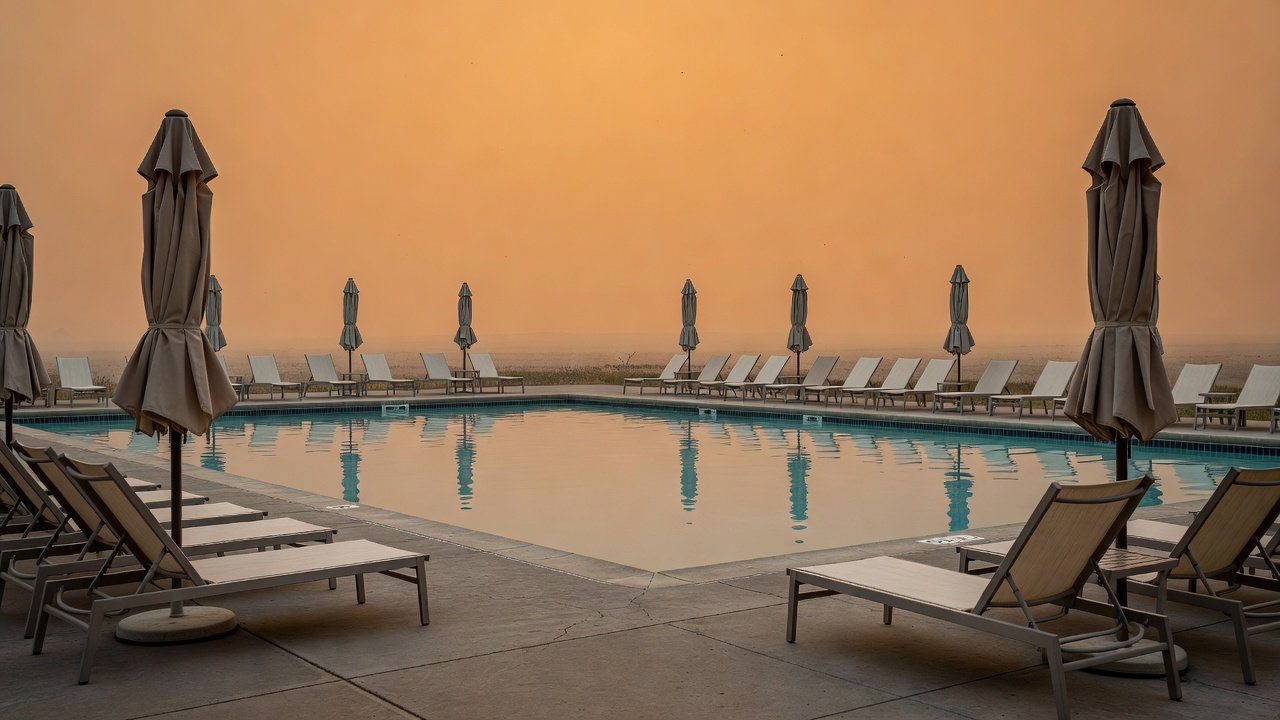
A smoke event forces two decisions at a hotel within hours of each other: whether the pool deck, rooftop bar and patio dining stay open, and what the HVAC system does about the air coming in. Both depend on the same number, the PM2.5 Air Quality Index, and both go better when the thresholds and actions were written down before the first haze arrived. EPA calls that document a Smoke Readiness Plan, and for properties in the West it has become as routine a piece of facility planning as a hurricane checklist is on the Gulf Coast.
The AQI scale you are working from
EPA revised the PM2.5 breakpoints of the AQI in 2024, alongside the tighter annual particulate standard. The “Good” ceiling dropped from 12.0 to 9.0 micrograms per cubic meter, so readings that used to show as Good may now show as Moderate. The thresholds that drive operating decisions did not move:
| AQI category | AQI range | PM2.5 (µg/m³, 24-hr) |
|---|---|---|
| Good | 0–50 | 0.0–9.0 |
| Moderate | 51–100 | 9.1–35.4 |
| Unhealthy for Sensitive Groups | 101–150 | 35.5–55.4 |
| Unhealthy | 151–200 | 55.5–125.4 |
Use AirNow, or the state or local air agency, as the reference reading. Low-cost sensors on the property are useful for trends and for checking whether indoor measures are working, but EPA itself describes them as showing trends rather than precise values.
Thresholds for outdoor amenities
There is no federal rule telling a hotel when to close a pool deck. There are, however, rules telling employers when outdoor work triggers protections, and those make a sensible anchor because every outdoor amenity is also an outdoor workplace for lifeguards, servers, bartenders, valets and grounds staff.
- California (8 CCR 5141.1): applies where the PM2.5 AQI is 151 or higher. Employers must provide training and make N95-type respirators available for voluntary use, and use feasible engineering and administrative controls; above AQI 500, respirator use becomes mandatory.
- Oregon OSHA: its wildfire smoke rule applies to outdoor workplaces from AQI 101 for PM2.5, with training and voluntary respirator provisions, and requires feasible controls at higher levels.
- Washington (Chapter 296-820 WAC): L&I’s rule starts its requirements below the California trigger, with training and response steps at lower PM2.5 concentrations and stronger requirements at AQI 151. Confirm the current figures in the rule text, since the thresholds were revised between the emergency and permanent rules.
A workable tiered plan for outdoor amenities looks like this:
AQI 101–150 (Unhealthy for Sensitive Groups). Keep amenities open, but post the reading at the pool and patio, shorten outdoor shifts, move strenuous tasks such as deck cleaning and furniture moves indoors, and reach out to groups with outdoor events on the books. In Oregon, worker protections already apply.
AQI 151–200 (Unhealthy). Close the pool deck and move outdoor dining and events indoors. This is the point at which California’s and Washington’s employer requirements fully engage, so the remaining outdoor roles, valet and security in particular, need respirators available, training on record and rotation indoors.
AQI above 200. Suspend non-essential outdoor service entirely. Valet and loading-dock work continue only with controls in place.
Write the decision owner into the plan by role, usually the manager on duty, so the call does not wait for someone to reach the general manager.
HVAC response: filtration first, then outdoor air
Filtration
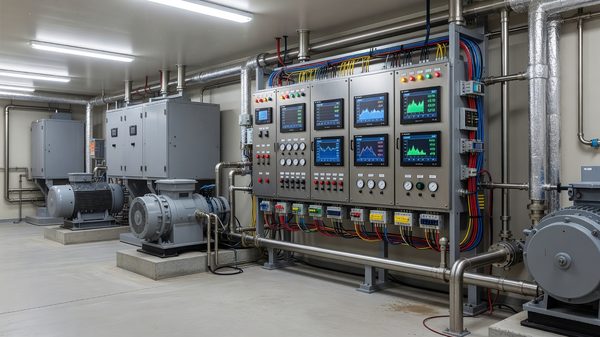
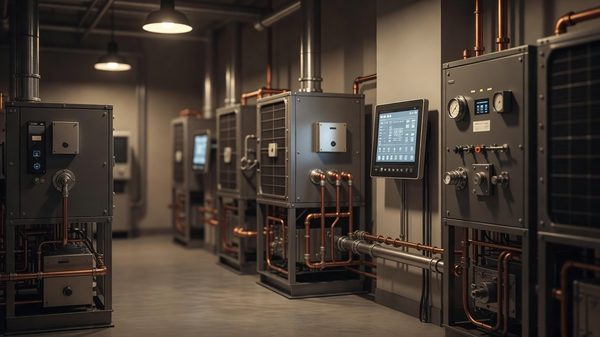
EPA’s guidance for commercial buildings recommends MERV 13 or higher filters during smoke events. The catch is the fan. A higher-efficiency filter adds pressure drop, and not every air handler can carry it without losing airflow. Before smoke season:
- Confirm with the equipment manufacturer or a mechanical engineer which units can take MERV 13 at design airflow.
- Install a pressure gauge or port on at least one air handler, as EPA recommends, so staff can see filters loading during an event rather than guessing.
- Stock spare filters for at least two full change-outs. Filters load quickly in heavy smoke, and suppliers run short during regional events.
Properties with a structured hotel HVAC filter program can fold the smoke-season stock and the higher-efficiency changeover into the existing schedule.
Outdoor air and pressurization
EPA’s framework allows temporary reductions in outdoor air during smoke events, while maintaining positive building pressure so smoke is not drawn in through doors and gaps. ASHRAE Guideline 44-2024, published in December 2024, addresses the same territory for commercial buildings: planning before the event, reducing ventilation during it, keeping extra filters on hand and adding targeted air cleaning where central filtration is not enough.
In a hotel, that translates into:
- Reduce outdoor air on central systems to the minimum that holds positive pressure, and document the setpoints so they are restored afterward.
- Keep kitchen hoods and their makeup air in balance; cutting makeup air while exhaust runs pulls the building negative.
- Limit the number of entrances in use, as EPA suggests, and keep vestibule doors closed.
- Remember guestrooms. PTACs and through-wall units pull outdoor air directly and have very limited filtration. Housekeeping can set them to recirculate where the unit allows, and engineering can identify which room stacks are worst affected.
Cleaner air spaces
Decide in advance which spaces become cleaner-air rooms: typically the lobby, a ballroom or meeting room with its own air handler, and the fitness center. Portable HEPA air cleaners sized to those rooms, bought before the season, are what EPA’s planning framework expects. Guests asking for a room air cleaner is a predictable request during a regional event; a property with a small fleet ready can say yes.
Guest communication
Guests notice smoke before the AQI is posted. The plan should include:
- A short message for the front desk and app explaining which amenities are closed, at what AQI level, and when they will reopen.
- A standard note in pre-arrival emails during active events.
- Event and group sales contact scripts for outdoor functions, with indoor alternatives already identified.
After the event
Restore outdoor air setpoints, replace filters that loaded during the event, and inspect intake plenums and coils for ash. Then review: which units could not hold MERV 13, how quickly spare stock ran down, and what the indoor sensor readings showed against outdoor AQI. That review is the input for next season’s plan. For the wider program of monitoring and maintaining indoor conditions, see hotel indoor air quality management.
The most useful single action this off-season is to confirm which air handlers can actually run MERV 13 at design airflow. Every other step in the plan depends on knowing that answer before the sky turns orange.