Commercial kitchen ventilation is one of the most technically demanding mechanical systems in hotel facility management. Kitchen exhaust removes heat, smoke, grease-laden vapors, and combustion products from the cooking environment — and does it while maintaining makeup air balance, integrating with fire suppression systems, complying with NFPA 96, and operating reliably through years of grease accumulation in one of the most thermally demanding environments in the building.
For hotel directors of engineering managing full-service properties with restaurant operations, understanding kitchen ventilation requirements is essential — both for the ongoing maintenance program and for the compliance obligations that affect fire safety and insurance coverage.
Kitchen Hood System Fundamentals
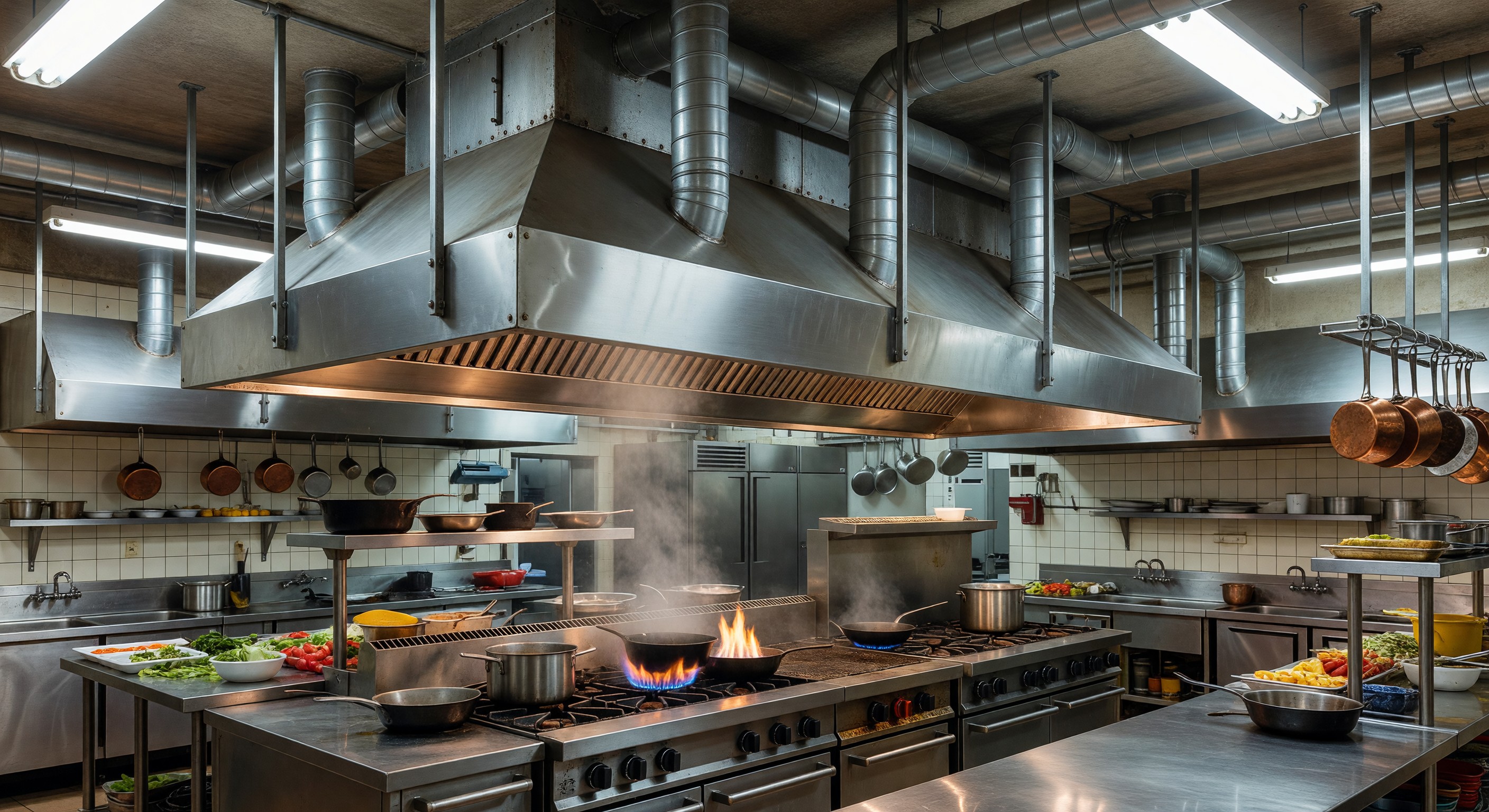
Type I hoods: Required over cooking equipment that produces grease-laden vapors — fryers, griddles, ranges, broilers, woks, and charbroilers. Type I hoods include a grease filtration system and must be connected to a listed fire suppression system. The exhaust plenum, filters, and duct work are the primary surfaces where grease accumulates.
Type II hoods: Used over equipment that produces heat, moisture, and odors but not grease — dishwashers, steamers, and ovens without significant grease production. Type II hoods require exhaust and makeup air but do not require grease filters or fire suppression systems.
Exhaust flow rates: Hood exhaust capacity (measured in CFM — cubic feet per minute) must be matched to the cooking equipment. Underpowered hoods allow grease vapors to escape into the kitchen environment; overpowered hoods are energy-intensive and create uncomfortable working conditions. Exhaust rates are specified by the hood manufacturer and local mechanical code based on equipment type, cooking surface area, and hood geometry.
Makeup air: For every cubic foot of air exhausted, an equal volume must be supplied to the kitchen — or negative pressure will develop, affecting door operation, comfort, and hood performance. Makeup air can be delivered through ceiling supply diffusers, front-face discharge from the hood, or a combination of methods. Heated or conditioned makeup air is preferred in climates with cold winters — delivering unconditioned cold air directly at the cooking line creates uncomfortable working conditions.
NFPA 96 Compliance Requirements
NFPA 96 (Standard for Ventilation Control and Fire Protection of Commercial Cooking Operations) is the primary standard governing hotel commercial kitchen ventilation and fire safety. Key requirements:
Cleaning frequency: Grease accumulation in the hood, plenum, filters, and exhaust ductwork is the primary kitchen fire risk. NFPA 96 Table 11.4 specifies minimum cleaning frequencies based on cooking volume:
- Systems serving solid fuel cooking: monthly
- Systems serving high-volume cooking (24-hour operations, woks, charbroilers): quarterly
- Systems serving moderate-volume cooking (most hotel restaurants): semi-annually
- Systems serving low-volume cooking: annually
Cleaning documentation: Cleaning must be performed by qualified personnel. After cleaning, the hood cleaner installs a dated sticker indicating the next required cleaning date. Incomplete cleaning or excessive time beyond required frequency creates code violations — and more critically, fire risk.
Exhaust ductwork: Grease duct must be constructed of listed materials (typically 16-gauge carbon steel or 18-gauge stainless steel), welded airtight, and maintained grease-tight. Access panels must be provided every 12 feet and at changes in direction to allow inspection and cleaning.
Grease drip trays and collection: Grease extracted from cooking vapors by the hood filters flows to collection trays below the filters. Trays must be maintained and emptied frequently — overflow creates a fire risk. Automatic grease drawer emptying systems are available for high-volume operations.
Inspection requirements: NFPA 96 requires the entire cooking system (hood, grease duct, fan, and fire suppression) to be inspected by a qualified professional at the same intervals as cleaning, and the fire suppression system inspected semi-annually.
Fire Suppression System Integration
Type I hoods must be equipped with listed fire suppression systems that can control cooking fires before they spread through the grease duct. Common systems:
Wet chemical suppression (ANSUL R-102 and similar): The standard for most hotel commercial kitchens. The system discharges a wet chemical agent (potassium-based) that reacts with cooking oil and grease to form a soapy blanket (saponification) that suppresses the fire and prevents re-ignition. Nozzles are positioned to cover all cooking surfaces and the grease plenum.
Fuel and electrical interlock: The suppression system must be interlocked to shut off gas and electrical power to cooking equipment upon activation — preventing fuel from feeding the fire after suppression agent discharge.
Semi-annual inspection: Wet chemical systems require semi-annual inspection and maintenance by a licensed fire suppression contractor. Inspection includes: nozzle condition and positioning, agent quantity, cylinder pressure, fusible links (which trigger automatic activation if a fire occurs when the system is not manually activated), and pull station operation.
Six-year service: NFPA 17A requires a 6-year internal examination of the suppression system components, including cylinder and valve inspection and agent replacement.
Exhaust Fan Maintenance
The exhaust fan at the roof termination of the kitchen exhaust system is continuously exposed to grease-laden air and requires regular attention:
Belt-driven vs. direct-drive fans: Belt-driven fans require belt inspection and replacement (typically annually or at tension failure). Direct-drive fans are lower maintenance but motor failure requires full motor replacement.
Grease accumulation on the fan: Even with clean filters, some grease passes through and deposits on the exhaust fan blades and housing. Significant buildup unbalances the fan, increasing vibration and bearing wear. Fan cleaning (concurrent with hood and duct cleaning) maintains fan balance and extends service life.
Roof penetration curb: The exhaust fan sits on a curb above the roof. Grease that drips from the fan is collected in a grease cup that must be emptied. Overflow of the grease cup onto the roof membrane is a fire risk and causes roof membrane deterioration from petroleum products.
Hinge-mounted access: Current best practice is upblast exhaust fans mounted on hinge curbs that allow the fan to swing away from the duct opening for cleaning access — eliminating the need to remove the fan entirely for duct cleaning.
Frequently Asked Questions
How do I know when my hotel kitchen hood needs cleaning? The NFPA 96 cleaning schedule provides minimum intervals, but actual cleaning need depends on cooking volume and menu. Visible grease buildup on the hood filters or plenum surfaces beyond 1/8 inch indicates cleaning is overdue. Grease dripping from filters, reduced airflow apparent in smoke behavior near the cooking surface, or unusual cooking odors escaping the hood capture zone are operational indicators of insufficient cleaning or filter saturation. When in doubt, clean more frequently — excess cleaning is an operating cost; fire from inadequate cleaning is a catastrophic loss.
What qualifications should kitchen hood cleaning contractors have? NFPA 96 requires cleaning by “qualified individuals.” The International Kitchen Exhaust Cleaning Association (IKECA) and the National Air Duct Cleaners Association (NADCA) offer certification programs for kitchen exhaust cleaning professionals. Contractors should provide before/after photographs and a signed certification of work performed documenting what was cleaned and any areas not accessible. Insurance certificates for the contractor should include pollution liability (in case of improper grease disposal) and workers’ compensation.
How does kitchen exhaust cleaning frequency affect fire insurance premiums? Hotel property insurance underwriters review kitchen exhaust cleaning documentation as part of risk assessment. Properties with cleaning programs compliant with NFPA 96 frequency requirements, documented with dated contractor stickers and cleaning records, are viewed as lower risk. Properties with gaps in cleaning documentation may face higher premiums or coverage restrictions. A kitchen fire that occurs after a missed cleaning cycle may create coverage disputes if the insurer can demonstrate the fire was caused by foreseeable grease accumulation.
What are the most common NFPA 96 violations found during fire marshal inspections? The most common violations: (1) Cleaning frequency documentation deficiencies — missing or outdated cleaning stickers, gaps in cleaning records; (2) Grease accumulation at duct access panels and vertical duct sections — areas where incomplete cleaning is common; (3) Fire suppression system inspection deferrals — missed semi-annual inspections; (4) Missing or repositioned suppression system nozzles — equipment changes without suppression system reconfiguration; (5) Grease cup overflow at exhaust fan — infrequent cup emptying in properties without regular roof inspections.
Further Reading from Authoritative Sources
- NFPA 96 hotel commercial kitchen ventilation and fire suppression standards — NFPA 96 (Standard for Ventilation Control and Fire Protection of Commercial Cooking Operations) and NFPA 17A are the primary standards governing hotel commercial kitchen ventilation compliance, cleaning schedules, and fire suppression system maintenance requirements applicable to hotel restaurant operations.
- OSHA commercial kitchen fire safety and ventilation compliance standards — OSHA provides commercial kitchen fire safety standards, workplace hazard requirements for cooking operations, and compliance guidance applicable to hotel kitchen ventilation program management, cleaning contractor qualification, and documentation requirements.