Utility costs across U.S. hotels run 27.5% higher than they did in 2019, and 2026 budget season arrived with ADR growth flattening — meaning revenue can no longer absorb cost increases the way it did through the 2022–2024 recovery. Labor is set by market wage and brand standard. Insurance is set by climate-risk underwriting. Property taxes are set by the assessor. Energy is the one substantial operating line where a director of engineering can move the number in the current fiscal year without ownership approval, a union negotiation, or a market shift. That makes it the first place to work, and the order of operations matters more than the technology.
Why Energy Rises to the Top of the 2026 List
HVS’s 2026 profitability outlook puts GOP margin compression across all property types, driven by labor, evolving operating standards, and shared-service allocations — with insurance and utilities adding non-operating strain. AHLA’s 2026 State of the Industry report names rising operating costs and staffing as the top owner concerns nationally, with continued pressure from labor, insurance, and energy.
Energy typically lands between 4% and 6% of total revenue for a full-service hotel, and closer to 10% at luxury properties where pool, spa, and F&B loads stack onto guestroom conditioning. Electricity alone accounts for the majority of the utility bill at most properties. That is a large enough share to matter to NOI and small enough that a 20% reduction does not require a capital campaign — it requires sequencing.
The trap is starting with the most visible project instead of the most consequential one. Solar canopies and lobby LED retrofits photograph well for an ownership deck. Neither is where the waste is.
Priority One: Unoccupied Guestrooms
The largest single pool of recoverable energy in a hotel is rooms nobody is in. An empty guestroom typically consumes 60–80% of the energy it uses when occupied, because the PTAC or fan coil holds setpoint regardless of whether anyone is there to feel it. At 65% annual occupancy, roughly a third of the room inventory is conditioning empty air every night of the year.
What to do first, in this order:
- Pull the occupancy data you already have. PMS check-in/check-out timestamps plus door-lock events tell you which floors and stacks sit empty on which nights. You do not need new sensors to know that the west tower runs at 30% Sunday through Tuesday.
- Set deep unoccupied setbacks on out-of-order and out-of-inventory rooms. These are free. Rooms held for renovation, long-term OOO, and seasonal closures should not be at guest setpoint.
- Then evaluate occupancy-based controls for the sold inventory. Occupancy sensors with setback logic — not full shutoff, which produces a hot, humid room and a guest complaint — are where measured savings live. Specify recovery time in the scope: a control that saves energy but delivers an 80°F room at check-in gets disabled by the front desk within a week.
Vendor case studies claim 20–35% utility reductions from smart controls, and those figures come from properties with poor baselines. Treat the range as an upper bound on a bad starting point rather than a forecast for a well-run building.
Priority Two: Measure Before You Buy
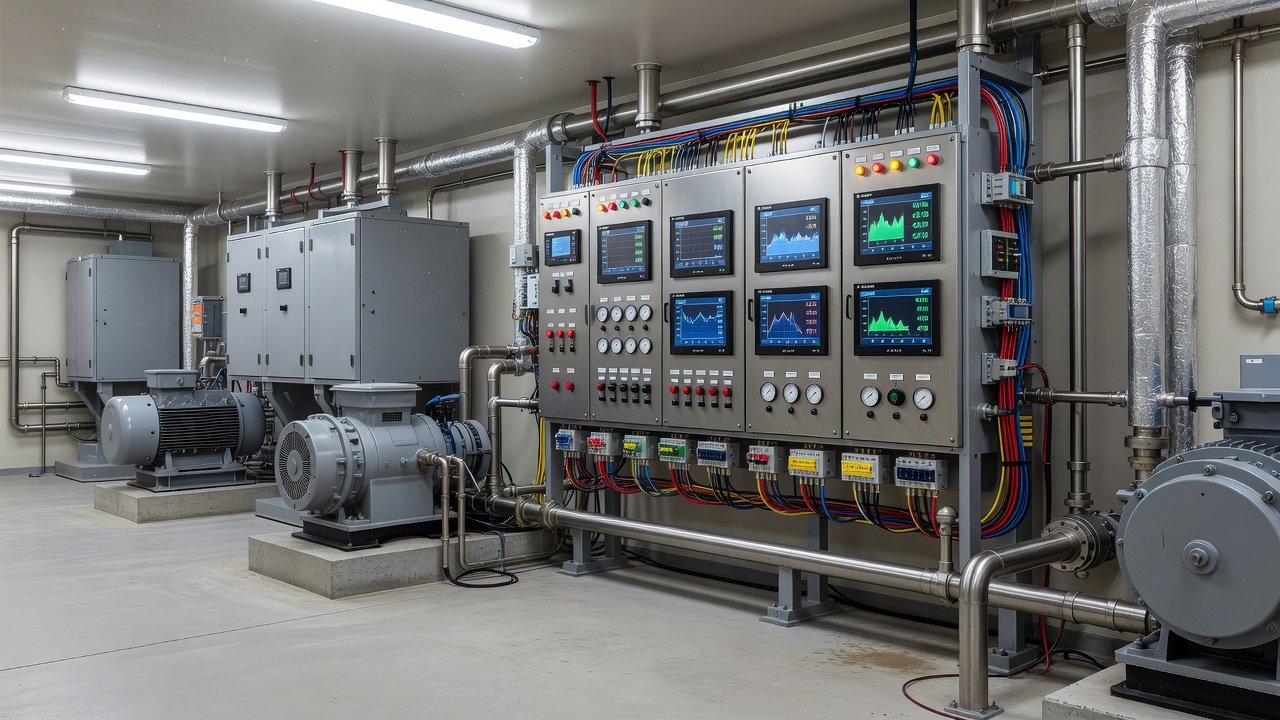
Most hotels are billed monthly at the meter and have no idea which system is drifting. Submetering or a building-level monitoring layer costs a fraction of an equipment replacement and tells you whether the money should go to the chiller, the domestic hot water loop, the laundry, or the kitchen makeup air.
Interval data changes what you argue for in a capital request. “The chiller is old” is a preference. “The chiller draws peak demand at 2 p.m. on days the outside air is 78°F, which is a controls sequence problem, not a capacity problem” is a finding — and often a repair rather than a replacement.
For portfolio operators, property-level dashboards also make the outlier visible. When eleven properties in a region run within a normal kWh-per-occupied-room band and one runs 40% above it, that is a work order, not a budget line.
Priority Three: The Controls Sequence Nobody Reviewed
Building automation systems drift. Schedules get overridden during a banquet and never restored. A setpoint gets changed to settle one guest complaint in 2023 and stays. Simultaneous heating and cooling in the same air handler is common and invisible on a monthly bill.
A retro-commissioning pass — verifying the BAS is doing what its sequence document says — is consistently among the lowest cost-per-unit-saved measures available to an existing building. It consumes engineering hours rather than capital, which is a real constraint in a year when staffing is the other headline concern, but it does not require ownership sign-off on a capital request.
Where Capital Belongs
Once the free and cheap measures are exhausted, capital arguments get stronger because the baseline is clean. Equipment replacement, envelope work, and heat-recovery projects should be justified against measured post-tuning consumption, not against the inflated pre-tuning number. Building a business case on waste you could have eliminated for free is how a project gets approved once and then underdelivers against its pro forma — which makes the next request harder.
Sequence the year as: eliminate conditioning of empty space, install the measurement to see what remains, correct the controls, then spend. Each step lowers the capital ask for the step after it.
The practical move for the remainder of 2026 is to walk the OOO room list and the BAS override log this week. Both are free, both take an afternoon, and both usually surface enough recoverable load to fund the monitoring layer that tells you where the rest of it went.