HVAC accounts for 50–60% of a full-service hotel’s total energy bill. That single fact is why directors of engineering keep returning to the same question: how much of that load can be cut without pulling equipment that still has useful life?
The answer emerging from properties across North America is that the savings are real, the payback is faster than most capital committees expect, and the primary intervention is software — not hardware. AI-driven energy management platforms are delivering 20–35% reductions in HVAC energy consumption at properties that have not replaced a single chiller or air handler. Understanding how they do it, and where the caveats sit, is the starting point for any rational evaluation.
What AI Controls Actually Do Differently
Conventional building automation systems (BAS) execute rules: if room temperature exceeds setpoint, activate cooling. They respond to conditions after they develop. AI control platforms invert that logic by predicting conditions before they arrive.
A modern AI energy management system continuously ingests data from multiple sources simultaneously — occupancy signals from the property management system (PMS), check-in and checkout schedules, weather forecasts, real-time utility rate data, and sensor readings from across the mechanical plant. The AI layer uses this data to pre-condition spaces ahead of demand rather than reacting to it, and to shed load during peak rate windows without affecting guest comfort.
The occupancy integration is the most operationally significant piece. When the PMS confirms a room is vacant, AI controls can set back temperature aggressively — reducing HVAC runtime in unoccupied rooms by 40–45% compared to conventional fixed-schedule thermostats, according to deployment data from Verdant Environmental Solutions, whose connected thermostats are installed in more than two million hotel rooms across North America and Europe. When check-in is imminent, the system begins conditioning the space so the room is at setpoint when the guest arrives.
At the plant level, AI optimization manages chiller staging, variable speed drives, and cooling tower operation in coordination rather than independently. The result is demand charge reduction — often 20–35% — on top of consumption savings.
Where the 20–35% Range Comes From
The energy savings headline requires some unpacking. The 20–35% figure refers to total HVAC energy reduction; it is not a reduction in total hotel energy cost. Since HVAC represents roughly half of total energy spend, a 30% HVAC reduction translates to approximately 15% off the overall utility bill — meaningful but not the same number.
The variance within the range is real and driven by several property-specific factors:
Baseline efficiency of existing equipment. A property running original pneumatic controls from the 1990s will see larger AI-driven gains than one that installed a digital BAS five years ago. The AI has more room to improve against a weaker baseline.
Climate zone and utility rate structure. Properties in markets with significant peak demand charges — common in the Southeast and parts of the West — extract more value from load-shifting because the AI actively avoids those expensive rate windows. Properties on flat-rate tariffs capture consumption savings but miss the demand charge component.
Occupancy patterns. High-turnover transient hotels generate more dynamic occupancy signals for the AI to act on. Extended-stay or group-heavy properties with more predictable occupancy may see smaller marginal gains from the predictive piece.
Integration depth. Systems that connect only to thermostats capture guestroom savings. Systems that connect to central plant equipment as well capture the larger chiller and cooling tower optimization gains.
A 300-room full-service property spending $600,000 annually on energy can reasonably model $60,000–$100,000 in annual savings from a well-integrated deployment. Payback periods for controls-only retrofits typically run 12 to 18 months based on current hardware, software, and installation pricing.
The Retrofit Path: What You Are Actually Buying
The critical distinction for directors of engineering is between a controls retrofit and an equipment replacement. AI energy management is almost always a controls retrofit.
The core components are:
Smart thermostats with occupancy sensing. These replace existing in-room thermostats and add passive infrared or millimeter-wave occupancy detection. Per-room hardware and installation costs for a controls-only retrofit currently run $800–$1,500 per room. Units integrate with the existing fan coil unit or PTAC; no refrigerant work, no ductwork modification.
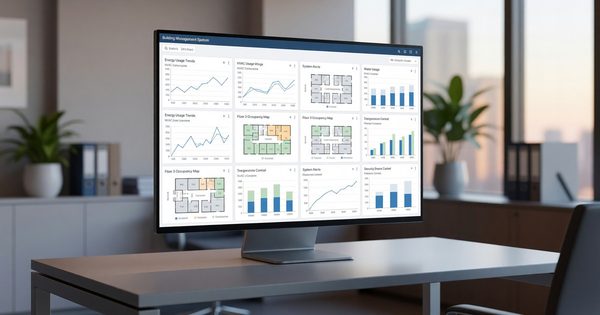
Central AI software platform. Cloud-hosted or on-premises depending on property requirements. This is where the predictive logic runs, where PMS integration is configured, and where your engineering team views the energy dashboard. Software is typically licensed on a per-room annual subscription or a multi-year SaaS contract.
PMS integration middleware. Bi-directional API connection between the energy platform and your PMS. This is frequently where implementations slow down. Legacy PMS platforms — particularly older Opera versions or proprietary systems — may require middleware or may lack the real-time API endpoints that AI platforms depend on for occupancy data. Confirm API compatibility before signing a software contract.
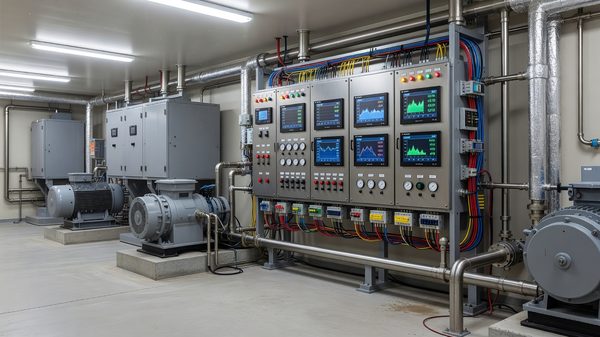
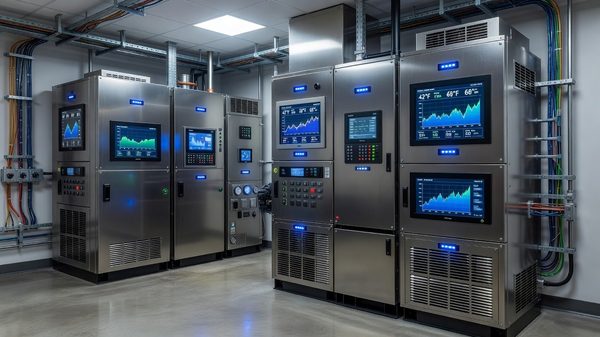
Plant-level sensors and control nodes. For properties that want chiller and cooling tower optimization on top of guestroom controls, additional metering and control hardware is required at the mechanical plant. This is where Honeywell, Siemens, Johnson Controls, and Schneider Electric compete with integrated building automation suites; Verdant, Jengu, and newer entrants like AIIR focus more on the guestroom layer.
In February 2025, Siemens launched the SpaceLogic Touchscreen Room Controller for guest comfort integration with building automation. AIIR installed its first hotel AI HVAC system in Tennessee in October 2025. The vendor landscape is expanding.
ESG Reporting Is Now a Procurement Factor
Directors of engineering evaluating AI HVAC controls in 2026 are operating in a different regulatory and commercial environment than they were three years ago.
The AHLA, HFTP, and the Global Finance Committee jointly released the 12th Revised Edition of the Uniform System of Accounts for the Lodging Industry (USALI), effective January 1, 2026. The revised edition replaces the old Utilities Schedule with a new Energy, Water, and Waste (EWW) Schedule, creating a standardized framework for tracking energy consumption per occupied room (ECOR), HVAC runtime and setback performance, and carbon intensity metrics.
This matters for capital allocation decisions. Lenders and institutional investors are increasingly requiring properties to report against these metrics. AI energy management systems that generate granular, exportable ECOR data make that reporting substantially easier. Properties that cannot produce the data are at a competitive disadvantage when refinancing or seeking brand affiliation upgrades.
IHG has named Verdant as an approved vendor for connected thermostats across its portfolio. Wyndham Hotels and Resorts EMEA designated Verdant a preferred supplier. These brand-level approvals create a de facto procurement shortlist for franchisees and managed properties, though they do not preclude evaluation of alternatives.
What to Evaluate Before You Buy
A well-structured evaluation process for AI HVAC controls should cover five areas:
PMS compatibility audit. Request a formal API compatibility confirmation from any software vendor before negotiating pricing. Ask specifically which PMS version you are running, whether the integration is bi-directional, and whether occupancy data flows in real time or in batch updates. Batch updates (hourly or nightly sync) significantly reduce the system’s ability to respond to early checkouts and late arrivals.
Metering baseline. You cannot measure what you have not metered. If your property does not currently have submeter data for HVAC consumption separate from total utility consumption, establish that baseline before deploying AI controls. Without it, verifying savings claims after deployment is impossible and your capital committee will ask.
Vendor case studies from comparable properties. Request documented case studies from hotels with similar room counts, climate zones, and PMS platforms. Vendor-supplied performance data should include the baseline period, measurement methodology, and whether savings figures are verified by utility bills or modeled.
Staff training scope. AI platforms require your engineering team to monitor dashboards, respond to alerts, and periodically re-tune setpoints. Budget for initial training and ongoing support — under-utilized platforms are a common reason properties underperform projected savings.
Contract structure. Confirm whether the software subscription is indexed to rooms or consumption. Verify data ownership if you switch vendors and that the platform exports in formats compatible with your ESG reporting workflows.
The variables that determine whether you land at the top or bottom of the 20–35% range are largely within your control — integration depth, metering infrastructure, and evaluation rigor.
For engineering teams managing the full building envelope, HVAC is the highest-value starting point. The AI controls category has matured, proven deployments exist at scale, the vendor market is competitive, and the 12–18 month payback window sits well within typical capital approval thresholds.